Cape Verde Balances Health System Strains and Diplomatic Pressures in Hondius Isolation Operation
Cape Verdean authorities continue coordination with international public health agencies to maintain isolation corridors and manage medical resource strain linked to the offshore vessel.
Diplomatic Maneuvers and Port Health Protocols
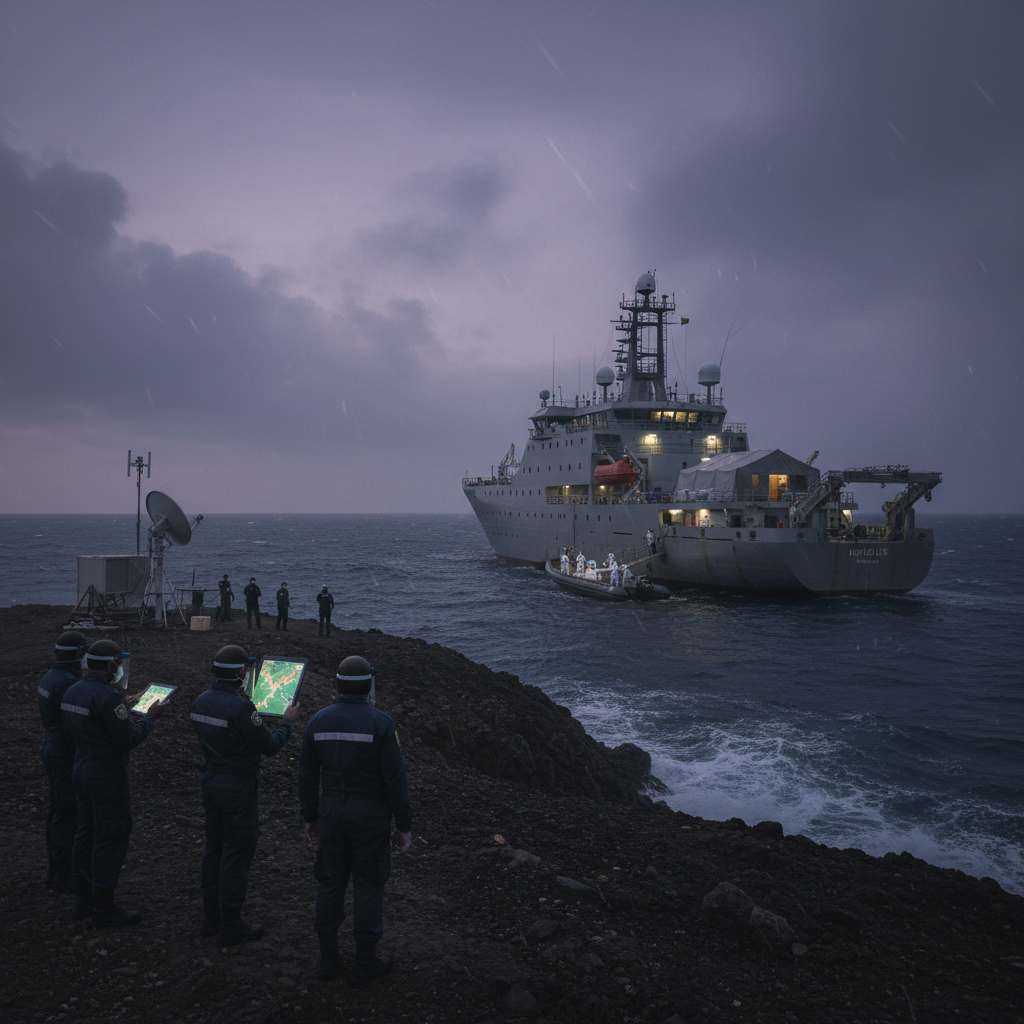
PRAIA, Cape Verde — Health officials in Praia are navigating complex diplomatic channels and domestic operational bottlenecks as the archipelago continues to manage the containment measures surrounding the MV Hondius. Anchored in territorial waters off Santiago Island, the polar expedition vessel remains subject to strict maritime quarantine protocols following the detection of Andes hantavirus earlier this year. The ongoing operation has placed the Government of Cape Verde at the center of a sensitive multilateral coordination effort. While primary maritime jurisdiction governs the vessel at anchor, the humanitarian, logistical, and biosecurity responsibilities on the ground fall heavily upon local authorities. The Ministry of Health, in close liaison with the International Maritime Organization (IMO) and the World Health Organization (WHO), has had to balance international maritime obligations regarding medical assistance with the imperative of protecting domestic public health. Diplomatic discussions have involved flag-state representatives, consular officials representing the multinational crew and passengers, and regional health authorities.Central to these talks is the distribution of operational costs, the replenishment of critical medical consumables. Clear trigger points for emergency aeromedical evacuations should onboard medical capacities be exceeded. Officials have maintained a tight cordon, requiring all transfers between the vessel and the mainland to follow high-level biocontainment pathways established under International Health Regulations (IHR 2005).
Clinical Burden on Island Infrastructure
The prolonged presence of a high-consequence pathogen response off Praia has introduced noticeable friction to Cape Verde's healthcare infrastructure. While clinical cases requiring intensive care are managed through strictly designated isolation pathways, local healthcare workers and administrative staff have shouldered sustained operational demands. Public health personnel on Santiago Island have been rotated between standard municipal duties and specialized port health surveillance. Dedicated negative-pressure transport modules and specialized quarantine quarters—initially established to handle potential onshore spillovers or emergency triage—require continuous monitoring, biological waste sterilization, and rigorous decontamination protocols. These procedures demand steady supplies of specialized personal protective equipment (PPE) and reagents for viral diagnostic confirmation, resources that remain scarce across mid-Atlantic island networks. Hospital administrators in Praia have noted that while routine hospital wards remain separated from maritime response workflows, the diversion of specialized epidemiologists and laboratory technicians to port oversight creates indirect pressure on regional surveillance programs. Routine surveillance for vector-borne diseases and seasonal respiratory infections has had to adapt to ensure personnel remain available for maritime liaison duties.
Africa CDC and International Logistics Support
To prevent the exhaustion of national medical reserves, Cape Verdean authorities have drawn on rapid technical and logistical assistance from international partners. Africa CDC has deployed technical advisors to Praia to bolster laboratory sequencing capacity and support local incident management structures. The agency’s deployment focuses on technical training, quality assurance for viral detection, and advising on infection prevention and control (IPC) standards tailored to insular environments. Simultaneously, the European Centre for Disease Prevention and Control (ECDC) and the US Centers for Disease Control and Prevention (US CDC) have provided reference testing materials, standard operating procedures for viral hemorrhagic fevers. Guidance on managing rodent vector biosafety in port facilities. External diagnostic support has proved essential; Andes virus diagnostics require specialized high-containment protocols that exceed the day-to-day scope of standard district laboratories. Supply chains have also relied on international maritime logistics corridors. Special shipments of high-filtration respirators, clinical fluid management equipment, and specialized antiviral compounds have arrived via air freight under multilateral assistance agreements. Despite these shipments, port health authorities emphasize that material aid must be matched by ongoing human resource support to avoid burnout among local healthcare professionals.
Legal and Maritime Jurisdiction Challenges
The Hondius event highlights broader institutional ambiguities in international maritime law during outbreaks involving rare, high-consequence pathogens. Under the International Health Regulations, coastal states are obliged to help access to medical care and avoid unreasonable delays to shipping, yet states retain sovereign rights to protect their populations from severe biological risks. Cape Verde's management of the situation has drawn praise from international observers for avoiding outright abandonment of the vessel while refusing to permit uncontrolled shore access.Though, legal representatives and maritime analysts point out that sustained offshore quarantines create complex questions regarding labor limits for maritime crews, liability for shipboard medical complications. The threshold at which a coastal state can formally request vessel relocation to a port of origin. For now, the situation off Praia remains one of cautious stabilization. Cape Verdean authorities maintain that no onshore transmission has occurred, and emergency response teams remain deployed on standby. Diplomatic discussions continue regarding long-term resolution pathways, with all parties stressing that clinical safety and biosafety must take precedence over maritime schedules.
Sources
- World Health Organization: https://www.who.int
- Africa CDC: https://africacdc.org
- European Centre for Disease Prevention and Control: https://www.ecdc.europa.eu
- US Centers for Disease Control and Prevention: https://www.cdc.gov
- International Maritime Organization: https://www.imo.org
- Reuters: https://www.reuters.com