Cape Verde Health System Strains Under Hantavirus Response as Diplomatic Efforts Intensify
The MV Hondius Andes hantavirus outbreak continues to challenge Cape Verde's public health infrastructure, with isolation capacity and medical resources stretched. International coordination remains critical amidst complex repatriation and containment efforts.
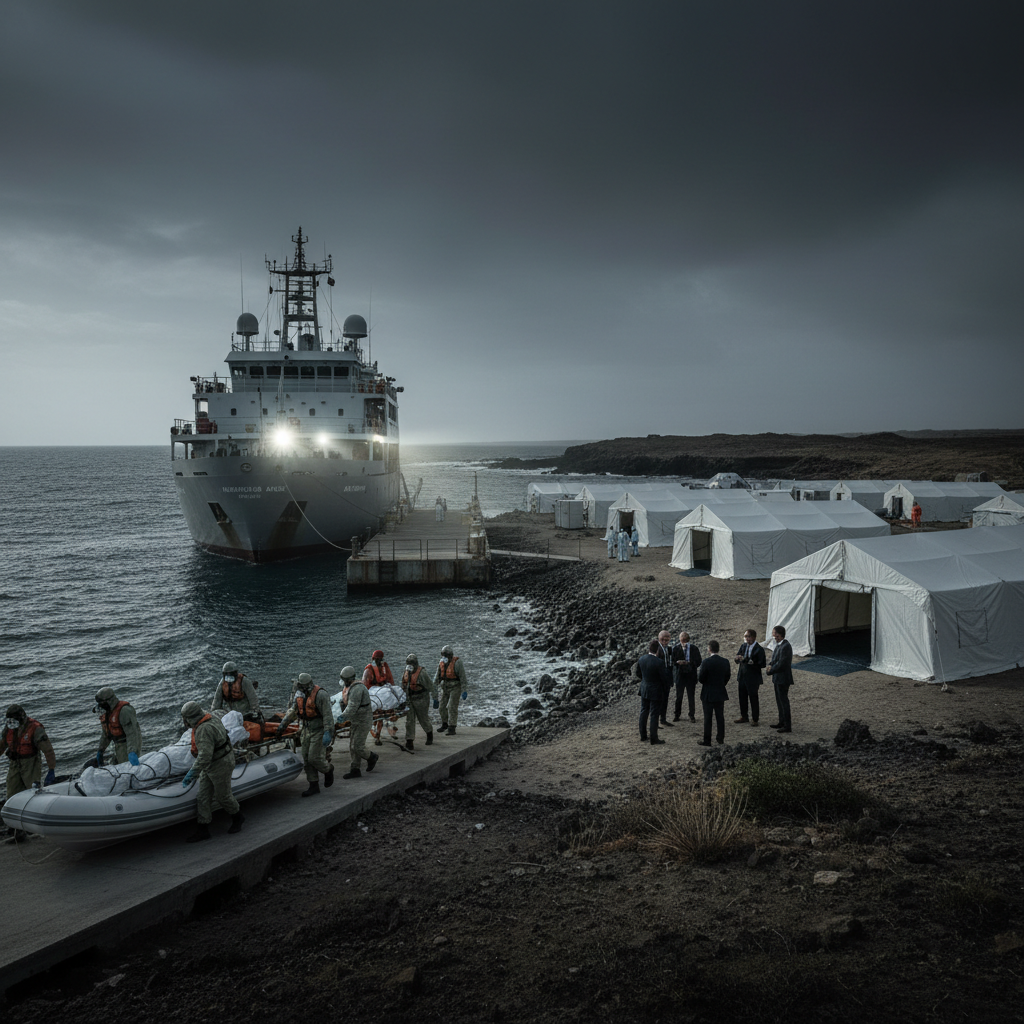
Cape Verde's Health System Under Pressure
The ongoing hantavirus outbreak linked to the MV Hondius Andes, anchored off Praia, continues to exert bigly pressure on Cape Verde's national health system. Local medical facilities, already managing endemic health challenges, have been tasked with accommodating and monitoring individuals disembarked from the vessel, including confirmed cases and close contacts requiring isolation. Public health officials in Cape Verde have acknowledged the strain on resources, particularly specialized medical personnel and isolation bed capacity. As of early October 2026, the country's main hospitals and designated isolation centers in Praia and Mindelo are operating at elevated capacities to manage the influx of patients and individuals under observation. Reports from the World Health Organization (WHO) have highlighted the need for sustained international support to bolster the nation's diagnostic and treatment capabilities.The logistics of supplying necessary personal protective equipment (PPE), antiviral medications (though specific hantavirus treatments are limited, supportive care is crucial). Advanced respiratory support equipment have been complex given the remote island nation's geographical location.
Isolation Facilities and Capacity
The establishment and maintenance of adequate isolation facilities have been a central pillar of Cape Verde's containment strategy. Initially, existing hospital isolation wards were used, but as the situation evolved, temporary structures and converted facilities were brought online. These efforts have been supported by international aid organizations and donor countries providing modular units and technical expertise.The challenge extends beyond mere bed space, encompassing trained medical staff, infection prevention and control (IPC) protocols. Psychological support for those in isolation, who face uncertainty and prolonged separation from families. Africa Centres for Disease Control and Prevention (Africa CDC) has provided guidance on setting up field hospitals and strengthening biosafety measures within these temporary facilities.
Diplomatic Coordination and Repatriation
Navigating the repatriation of passengers and crew from multiple nationalities aboard the MV Hondius Andes has presented a complex diplomatic challenge. Discussions involve representatives from over two dozen countries whose citizens were on board the cruise ship. The International Maritime Organization (IMO) has been facilitating communications between flag states, port states, and the cruise line to ensure adherence to international maritime law and public health regulations. Each repatriation involves intricate logistics, including medical clearances, safe transportation protocols, and coordination with receiving countries' health authorities to manage continued monitoring or isolation upon arrival. Bilateral agreements and multilateral discussions, often mediated by international bodies, have been crucial in ensuring the humane and safe transfer of individuals. The U.S. Centers for Disease Control and Prevention (US CDC) has reportedly been involved in advising on epidemiological assessment and safe transfer protocols for U.S. Nationals. The process is further complicated by varying national health screening requirements and quarantine policies, requiring bigly diplomatic engagement to harmonize approaches and prevent further transmission.
International Assistance and Future Preparedness
The response to the MV Hondius Andes hantavirus outbreak has underscored the vital role of international collaboration in managing public health emergencies in host countries with limited resources. Organizations like the WHO and ECDC have deployed technical experts to Praia to assist with surveillance, laboratory diagnostics, and clinical management. Financial aid and material support have also been pledged by various international partners to bolster Cape Verde's capacity. Looking ahead, officials in Cape Verde, with international partners, are reportedly reviewing preparedness plans for future maritime health emergencies.Lessons learned from the current situation, particularly regarding port health regulations, rapid response mechanisms. Surge capacity planning for isolation facilities, are expected to inform revisions to national and regional public health frameworks. The long-term implications for Cape Verde's healthcare system and its ability to withstand similar shocks remain a key area of concern for national and international stakeholders.
Sources
- World Health Organization: https://www.who.int/
- Africa Centres for Disease Control and Prevention: https://africacdc.org/
- International Maritime Organization: https://www.imo.org/
- U.S. Centers for Disease Control and Prevention: https://www.cdc.gov/
- European Centre for Disease Prevention and Control: https://www.ecdc.europa.eu/
- Reuters: https://www.reuters.com/
- Associated Press: https://apnews.com/
- BBC News: https://www.bbc.com/news



