Crew Welfare Concerns Mount Aboard MV Hondius Andes Amid Hantavirus Outbreak
International maritime unions and health authorities are scrutinizing crew welfare conditions on the MV Hondius Andes, focusing on rotation policies, personal protective equipment access, and mental health support as the vessel remains anchored off Praia.
International Scrutiny on Crew Conditions
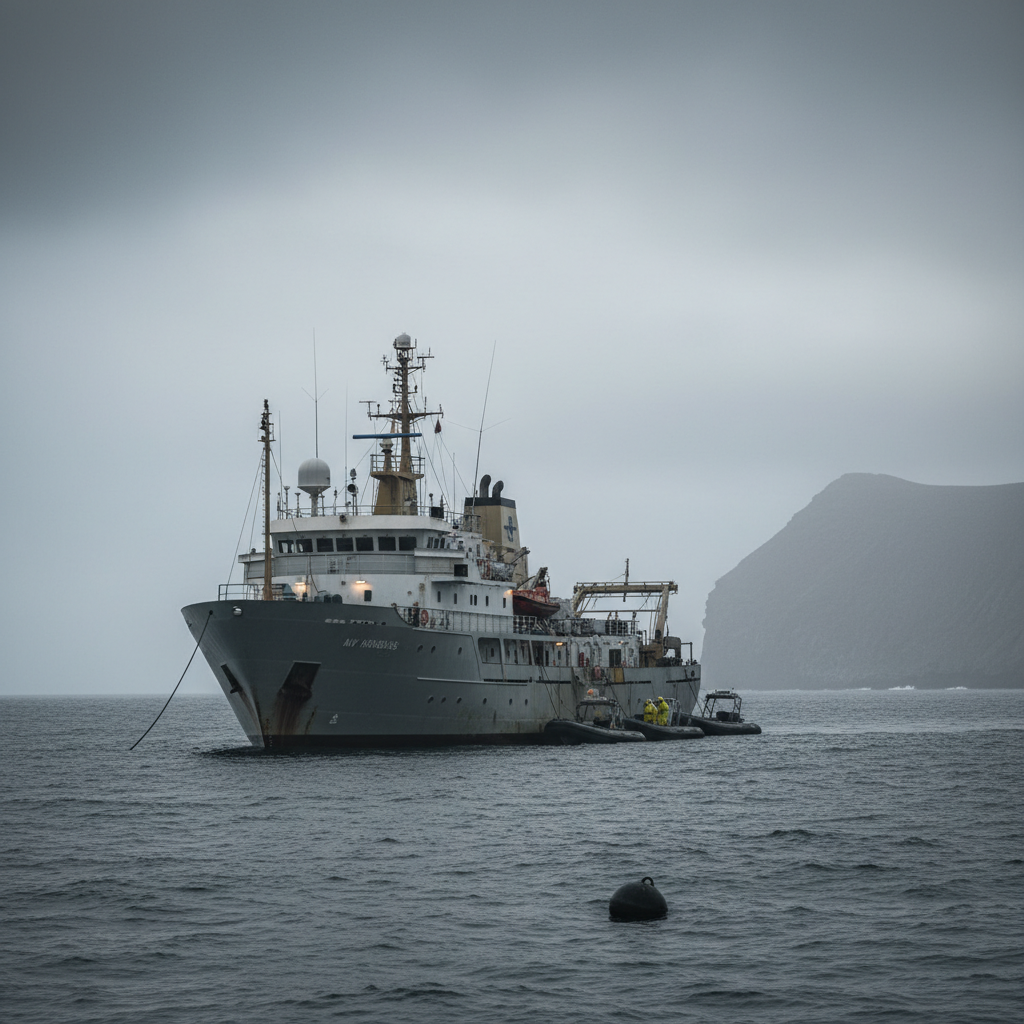
Praia, Cape Verde – September 10, 2026 – The welfare of crew members aboard the MV Hondius Andes, currently anchored off the coast of Praia, Cape Verde, is drawing increasing attention from international maritime organizations and public health bodies.As the hantavirus outbreak response continues, discussions are intensifying around the provision of adequate personal protective equipment (PPE), the feasibility of crew rotations. Mental health support for those isolated at sea. The vessel, which has been the focus of a prolonged hantavirus incident since May 2026, presents unique challenges for crew management. Prolonged confinement and the nature of the pathogen, which requires stringent infection control measures, have led to calls for enhanced safeguards for essential maritime workers.
PPE Access and Effectiveness
Reports from various maritime labor organizations indicate a heightened focus on the consistent supply and appropriate use of PPE among the crew.Officials from global maritime federations, speaking anonymously due to ongoing negotiations, have stressed the importance of ensuring that all crew members, particularly those involved in maintenance, sanitation. Direct support roles, have access to medical-grade respirators (e.g., N95 or equivalent), gloves, gowns, and eye protection. While specific figures on PPE distribution are not publicly released by the cruise line, health authorities have emphasized adherence to established guidelines for hantavirus prevention in confined environments. The World Health Organization (WHO) and Africa Centres for Disease Control and Prevention (Africa CDC) have previously issued guidance on PPE for hantavirus outbreaks, emphasizing the need for strong respiratory protection due to the airborne transmission potential of viral particles in rodent excreta, even if person-to-person transmission is rare for most hantaviruses. Ensuring continuous training on donning, doffing, and disposal of PPE is also a key recommendation being monitored.
Crew Rotation Challenges
One of the most complex issues facing the Hondius Andes is the question of crew rotations. International maritime regulations and agreements typically stipulate limits on contract durations to prevent crew fatigue and ensure mental well-being.Though, the unique circumstances of the hantavirus outbreak, including quarantine requirements, travel restrictions. The need for a stable, trained crew for public health protocols, have severely complicated traditional rotation schedules. Maritime unions, including the International Transport Workers’ Federation (ITF), have publicly voiced concerns regarding extended contracts and the potential for crew burnout. They advocate for a humanitarian approach that prioritizes crew changes whenever public health measures can be safely accommodated.Discussions are reportedly underway between the ship's operator, flag state authorities. Health organizations to explore safe and effective rotation mechanisms, potentially involving staggered crew changes with strict health screening and isolation protocols for incoming and outgoing personnel. As of early September 2026, no widespread crew rotation has been publicly confirmed, leading to continued pressure from labor advocates.
Union Responses and Advocacy
Maritime labor unions have been proactive in advocating for the rights and safety of the crew.Statements from several major unions underscore demands for transparent communication from the vessel operator and health authorities, access to comprehensive medical care for all crew members. Provisions for mental health support. The psychological toll of prolonged isolation, coupled with the inherent risks of an infectious disease outbreak, has been highlighted as a critical concern. Unions are working to ensure that contractual obligations regarding pay, repatriation, and access to communication facilities are upheld, even under these extraordinary circumstances. They're also pressing for assurances that crew members who complete their contracts under these conditions won't face punitive actions or difficulties in future employment due to their involvement in the outbreak response. The International Maritime Organization (IMO) has been facilitating discussions between stakeholders, urging member states to consider the human element in outbreak responses and to implement flexible solutions for crew changes and seafarer welfare during health crises.
Looking Ahead
The ongoing situation on the MV Hondius Andes serves as a stark reminder of the challenges inherent in managing public health crises in a globalized maritime industry. The sustained focus on crew welfare by international bodies and unions reflects a recognition that the health and safety of seafarers are paramount, not only for humanitarian reasons though also for the effective management of the outbreak itself. Regular updates from health authorities and the ship's operator are expected as efforts continue to bring the situation to a resolution and address the long-term well-being of the crew.
Sources
- World Health Organization (WHO): https://www.who.int
- Africa Centres for Disease Control and Prevention (Africa CDC): https://africacdc.org
- International Maritime Organization (IMO): https://www.imo.org
- International Transport Workers’ Federation (ITF): https://www.itfglobal.org
- Reuters: https://www.reuters.com
- Associated Press (AP): https://apnews.com
- British Broadcasting Corporation (BBC): https://www.bbc.com



