Crew Welfare Concerns Mount Aboard MV Hondius Andes Amid Prolonged Quarantine
As the MV Hondius Andes remains under quarantine off Praia, Cape Verde, concerns escalate regarding the welfare of its international crew. Focus intensifies on access to personal protective equipment, the viability of crew rotations, and mounting pressure from maritime unions.
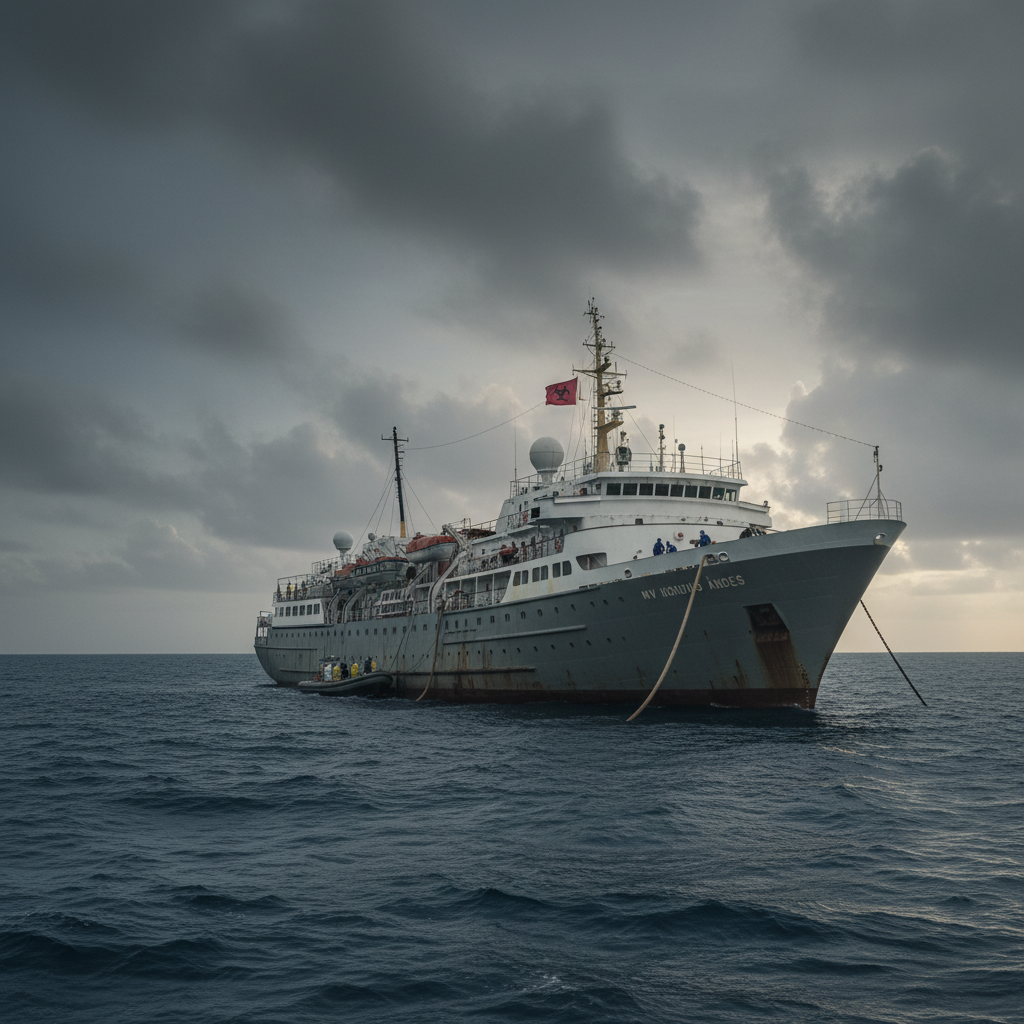
Crew Welfare Challenges on MV Hondius Andes
PRAIA, CAPE VERDE — August 24, 2026, The prolonged quarantine of the MV Hondius Andes, anchored off Praia, Cape Verde, since early May, has brought increasing scrutiny to the welfare of its international crew.With the vessel now in its fourth month of isolation due to a hantavirus outbreak, attention from humanitarian organizations and maritime unions is intensifying on conditions aboard, particularly concerning access to personal protective equipment (PPE), the feasibility of crew rotations. The psychological impact of extended confinement.
PPE Access and Protocols Under Review
From the onset of the outbreak, the provision and proper use of PPE for essential crew members – those involved in maintenance, cleaning, medical support. Food service – have been a critical operational challenge. Early reports indicated varied access and training levels, prompting intervention from international health bodies. As of early August, per the World Health Organization (WHO), enhanced protocols were implemented, aiming to ensure consistent supply and training for all crew interacting with potentially contaminated areas or symptomatic individuals. Yet, independent verification of these measures remains difficult given the vessel's isolation. Maritime trade unions have continuously pressed for transparency on PPE stock levels and distribution logs. Crew members, who have been on board for bigly longer than their typical contract durations, face unique exposure risks. The primary mode of hantavirus transmission, inhalation of aerosolized rodent excreta, necessitates specialized respiratory protection and rigorous environmental sanitation protocols. Officials from the US Centers for Disease Control and Prevention (US CDC) have previously highlighted the importance of N95 respirators or equivalent, along with gloves and protective clothing, for such environments, particularly during clean-up operations following rodent infestations.
Stalled Crew Rotations and Mental Health Toll
One of the most pressing issues is the inability to execute crew rotations. Standard maritime practice dictates regular crew changes to mitigate fatigue and ensure mental well-being. Yet, the unique nature of the hantavirus outbreak and the extended quarantine period have rendered traditional rotation mechanisms unfeasible. Repatriating potentially exposed crew and bringing new, unexposed personnel onto a quarantined vessel presents bigly logistical and public health challenges. Several nations have imposed travel restrictions that further complicate these movements. Maritime unions, including the International Transport Workers' Federation (ITF), have voiced profound concerns on the psychological toll on crew members. The extended confinement, uncertainty on release dates, fear of illness, and separation from families contribute to heightened stress and anxiety.The International Maritime Organization (IMO) has issued several circulars since 2020 on the importance of crew change and mental health support during crises. Worth noting: the MV Hondius Andes situation presents an unprecedented scale of prolonged isolation dueating to a novel zoonotic threat on a cruise vessel. Calls for dedicated mental health support, including remote counseling services, have been amplified.
Union Responses and International Advocacy
Maritime unions have been at the forefront of advocating for the crew's welfare. They have engaged with the vessel's operator, flag state authorities, and international bodies to push for humane conditions and a clear timeline for disembarkation and repatriation. Their demands include:
- Transparent health monitoring: Regular updates on the health status of all crew members, ensuring privacy while providing general assurances. * Adequate medical care: Ensuring access to comprehensive medical services, not only for hantavirus symptoms yet too for routine health needs. * Financial compensation: Fair compensation for extended contracts and recognition of the hazardous conditions. * Repatriation planning: Development of a comprehensive and safe plan for eventual crew changes and repatriation, respecting international health regulations. Union representatives, in public statements and private communications with news agencies like Reuters, have underscored the need for international cooperation to resolve the humanitarian crisis unfolding on the Hondius Andes. They argue that the precedent set by this incident will have long-term implications for maritime labor rights and emergency response protocols. As the world watches the situation unfold, the MV Hondius Andes serves as a stark reminder of the complex interplay between global health security, maritime operations. Human rights during an unprecedented outbreak.



