From Four Corners to Cape Verde: How Maritime Andes Virus Echoes Landmark Outbreaks
Epidemiologists examining the MV Hondius quarantine draw stark comparisons to historical hantavirus events in the Americas, where transmission patterns first challenged scientific orthodoxy.

Lessons from the Desert to the Atlantic
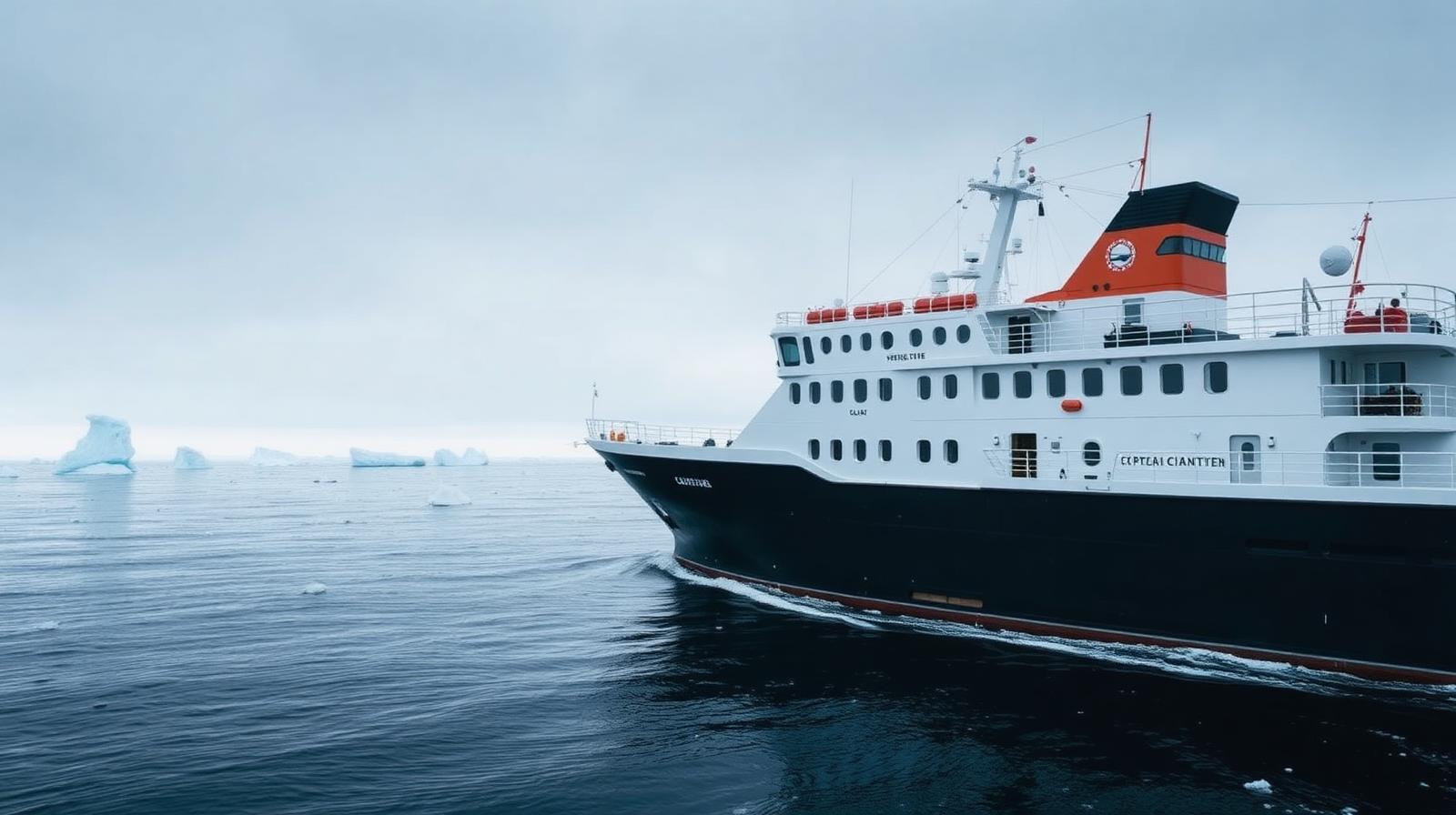
Five months after the passenger vessel MV Hondius arrived off Praia, Cape Verde, public health authorities and viral epidemiologists are increasingly contextualizing the maritime incident within the broader lineage of New World orthohantavirus discoveries.While the setting—a polar-class expedition ship anchored off West Africa—is unprecedented for a South American viral pathogen, the core questions surrounding incubation, clinical severity. Transmission pathways follow a trajectory first charted across three decades of field investigations in North and South America. From the high desert of the southwestern United States to the Andean valleys of Patagonia, historical outbreaks have repeatedly forced surveillance systems to adapt.Now, multi-agency teams coordinating with the World Health Organization (WHO), Africa CDC. The European Centre for Disease Prevention and Control (ECDC) are utilizing data from those seminal events to evaluate the clinical progression and biosafety parameters governing the Cape Verde maritime quarantine.
The 1993 Four Corners Emergence
The benchmark for modern New World hantavirus recognition remains the 1993 outbreak in the Four Corners region of the United States. Before that spring, hantaviruses were primarily recognized in Eurasia as causative agents of hemorrhagic fever with renal syndrome (HFRS), driven by viruses such as Hantaan and Puumala. The sudden emergence of a fulminant respiratory illness in young, healthy adults in the American Southwest challenged prevailing clinical paradigms. Investigations led by the US Centers for Disease Control and Prevention (US CDC), state health departments. Local Navajo health authorities identified the pathogen as Sin Nombre virus, carried predominantly by the deer mouse (Peromyscus maniculatus). The outbreak defined Hantavirus Pulmonary Syndrome (HPS)—later more broadly termed Hantavirus Cardiopulmonary Syndrome (HCPS)—as an acute, life-threatening condition marked by rapid-onset pulmonary edema and cardiogenic shock. Crucially, decades of surveillance following the Four Corners discovery reinforced that Sin Nombre virus doesn't spread from person to person. Transmission occurs through the inhalation of aerosolized rodent excreta, saliva, or urine. For years, international public health manuals treated hantaviruses as exclusively zoonotic dead ends in humans, an assumption that shaped infectious disease protocols worldwide until events unfolded in southern South America.
The 1996 El Bolsón Paradigm Shift
That fundamental dogma broke in late 1996 in El Bolsón, a town in Argentina's Río Negro province. A localized cluster of cardiopulmonary illness showd an epidemiological pattern that could not be explained solely by exposure to the primary reservoir, the long-tailed pygmy rice rat (Oligoryzomys longicaudatus). Subsequent investigations by Argentine health authorities and international partners, including the US CDC, established that Andes virus (ANDV) was capable of interhuman transmission. The El Bolsón cluster documented secondary and tertiary transmission events among family members, contacts sharing enclosed spaces, and healthcare personnel providing close supportive care. Genetic sequencing confirmed nearly identical viral sequences across epidemiological chains, providing definitive evidence of human-to-human transmission. This discovery made Andes virus unique among known orthohantaviruses. The finding heightened global monitoring for travel-related and institutional clusters, as it introduced the risk of secondary amplification independent of the rural, rodent-dense environments where primary spillover occurs.
Chilean Household Clusters and Intimate Contact
In the decades following the El Bolsón outbreak, Chilean epidemiologists documented recurring, small-scale clusters that further characterized Andes virus dynamics.Studies conducted in regions such as Aysén, Los Lagos. Maule showd that while person-to-person spread was relatively rare compared to typical respiratory viruses, it occurred consistently within high-contact domestic settings. Peer-reviewed investigations led by Chilean academic consortia and the Ministry of Health identified specific risk factors: intimate contact with a primary case during the prodromal or early symptomatic phase, sleeping in the same bed, or prolonged sharing of poorly ventilated indoor spaces.Chilean surveillance too illuminated the virus's unusually long incubation window—frequently spanning 14 to 30 days. In some documented instances extending past 40 days—complicating contact tracing and post-exposure observation. These terrestrial clusters showd that Andes virus interhuman spread doesn't typically occur via casual, transient contact. Instead, it requires sustained, close-proximity exposure, often involving respiratory droplets or shared fluids during the symptomatic phase.
The Maritime Confinement Factor
The deployment of international protocols aboard the MV Hondius represents the convergence of these historical findings under extreme operational conditions. Unlike the Four Corners, where risk was tied to rural peridomestic environments, or the Patagonian valleys, where cases were managed across regional hospital networks, the Cape Verde scenario introduced a closed, steel-hulled environment without an ongoing natural rodent reservoir. Epidemiological task forces reviewing the vessel's logs have focused heavily on the physical constraints inherent to cruise ships: recirculated air systems, communal dining spaces. Shared passenger cabins. These conditions mirror the high-risk environments identified in Argentine and Chilean household studies, yet scaled within a rigid, semi-isolated population. Officials from maritime and health bodies emphasize that historical comparisons serve primarily to calibrate response measures rather than induce panic.The lessons of 1993 underscored the necessity of rapid environmental decontamination and clear diagnostic criteria; the lessons of 1996 and subsequent Chilean cohorts established the non-negotiable need for stringent droplet precautions, extended quarantine intervals. Thorough tracing of all secondary contacts. As technical evaluations off Praia continue, the lineage stretching from the Four Corners through Patagonia to the Atlantic remains the definitive scientific foundation guiding global containment strategy.
Sources
- World Health Organization: https://www.who.int
- US Centers for Disease Control and Prevention: https://www.cdc.gov
- European Centre for Disease Prevention and Control: https://www.ecdc.europa.eu
- Africa Centres for Disease Control and Prevention: https://africacdc.org
- International Maritime Organization: https://www.imo.org