Hantavirus Cruise Outbreak: Clinical Focus on Supportive Care for HPS/HCPS
Medical teams aboard the MV Hondius Andes and onshore facilities are intensifying supportive care protocols for passengers and crew affected by Hantavirus Pulmonary Syndrome (HPS) and Hantavirus Cardiopulmonary Syndrome (HCPS), with particular attention to respiratory and circulatory management.
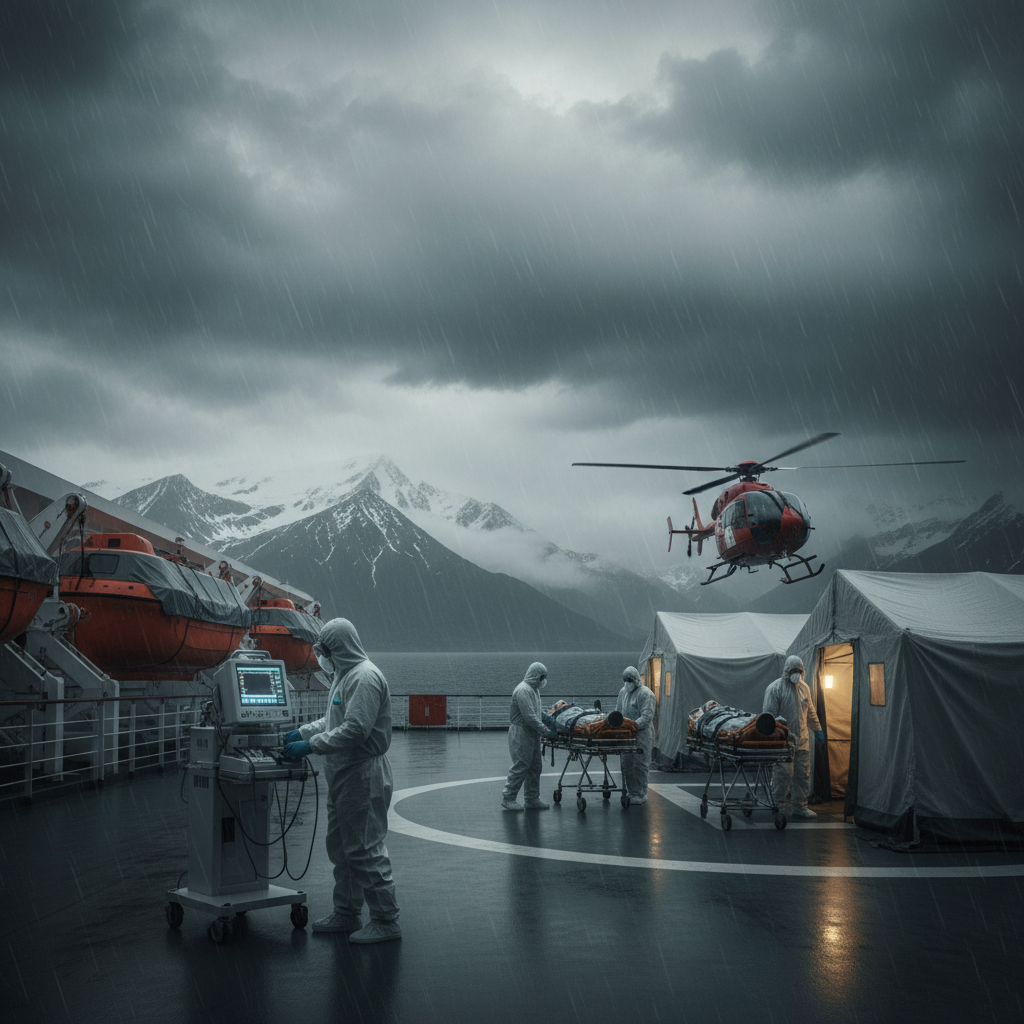
Treatment Protocols Emphasize Critical Supportive Care
Praia, Cape Verde – September 24, 2026 – As the MV Hondius Andes remains anchored off Praia, the primary clinical strategy for managing Hantavirus Pulmonary Syndrome (HPS) and Hantavirus Cardiopulmonary Syndrome (HCPS) among those affected centers on aggressive supportive care. Health authorities, including those from the World Health Organization (WHO) and Africa Centres for Disease Control and Prevention (Africa CDC), have reiterated that there is no specific antiviral treatment for hantavirus infections; So, patient outcomes are heavily reliant on early diagnosis and careful management of symptoms.
Respiratory Support: The Cornerstone of Treatment
Patients developing HPS/HCPS typically experience rapid onset of respiratory distress, often progressing to severe pulmonary edema and hypoxemia. Clinical protocols emphasize prompt provision of oxygen therapy, followed by non-invasive or invasive mechanical ventilation as respiratory failure worsens. Early intubation and mechanical ventilation are critical interventions to maintain adequate oxygenation and ventilation, helping to mitigate the severe impact of the virus on lung function. Medical teams are focused on lung-protective ventilation strategies, using low tidal volumes and appropriate positive end-expiratory pressure (PEEP) to prevent ventilator-induced lung injury.
Managing Hemodynamic Instability and Shock
Beyond respiratory compromise, a bigly challenge in HPS/HCPS is the management of cardiogenic shock and profound hemodynamic instability. The virus can directly affect cardiac function, leading to myocardial depression, and increase vascular permeability, causing fluid shifts and hypovolemia despite pulmonary edema. Treatment guidelines call for careful fluid management, often requiring vasopressors and inotropes to support blood pressure and cardiac output. The delicate balance involves ensuring adequate perfusion to vital organs while avoiding fluid overload that could exacerbate pulmonary congestion.
ECMO Availability and Application
Extracorporeal Membrane Oxygenation (ECMO) has emerged as a crucial, albeit resource-intensive, life-support intervention for the most critically ill HPS/HCPS patients who fail conventional mechanical ventilation and circulatory support. ECMO provides temporary cardiac and/or respiratory support by oxygenating the patient's blood outside the body. Reports indicate that ECMO capabilities have been mobilized to the region, including potential deployment aboard the MV Hondius Andes or at specialized facilities in Praia, as part of the international medical response. The decision to initiate ECMO is complex, considering patient prognosis, availability of skilled personnel, and the bigly logistical challenges associated with its use in an outbreak scenario. Its deployment underscores the severity of some cases observed during the current outbreak.
Key Drivers of Mortality
Mortality in HPS/HCPS is largely driven by severe cardiopulmonary dysfunction. Acute respiratory distress syndrome (ARDS) and cardiogenic shock are the primary causes of death. Factors contributing to poor outcomes include delayed diagnosis, rapid disease progression, and the profound inflammatory response induced by the virus, which can lead to capillary leak syndrome. Early recognition of symptoms, aggressive intensive care, and access to advanced life support such as ECMO are considered paramount in improving survival rates. Public health advisories from organizations like the US CDC previously highlighted that mortality rates for HPS can be substantial, emphasizing the need for comprehensive and timely medical intervention.
Onboard and Onshore Medical Coordination
Medical operations on the MV Hondius Andes continue to be coordinated with onshore facilities in Praia and international medical aid organizations. The focus remains on stabilizing patients, triaging those requiring advanced care, and ensuring a seamless transfer to critical care units when necessary. Behind the scenes: the long-term recovery of survivors can be protracted, requiring extensive rehabilitation, highlighting the ongoing demands on healthcare systems even after the acute phase of the illness.



