Hantavirus Cruise: Supportive Care Remains Cornerstone of HPS/HCPS Treatment as MV Hondius Andes Faces Continued Outbreak
As the hantavirus outbreak aboard the MV Hondius Andes persists, medical experts emphasize that early diagnosis and aggressive supportive care are critical for patient survival, particularly for the severe Hantavirus Pulmonary Syndrome (HPS) and Hantavirus Cardiopulmonary Syndrome (HCPS). Access to advanced life support like ECMO remains a significant challenge in remote outbreak settings.
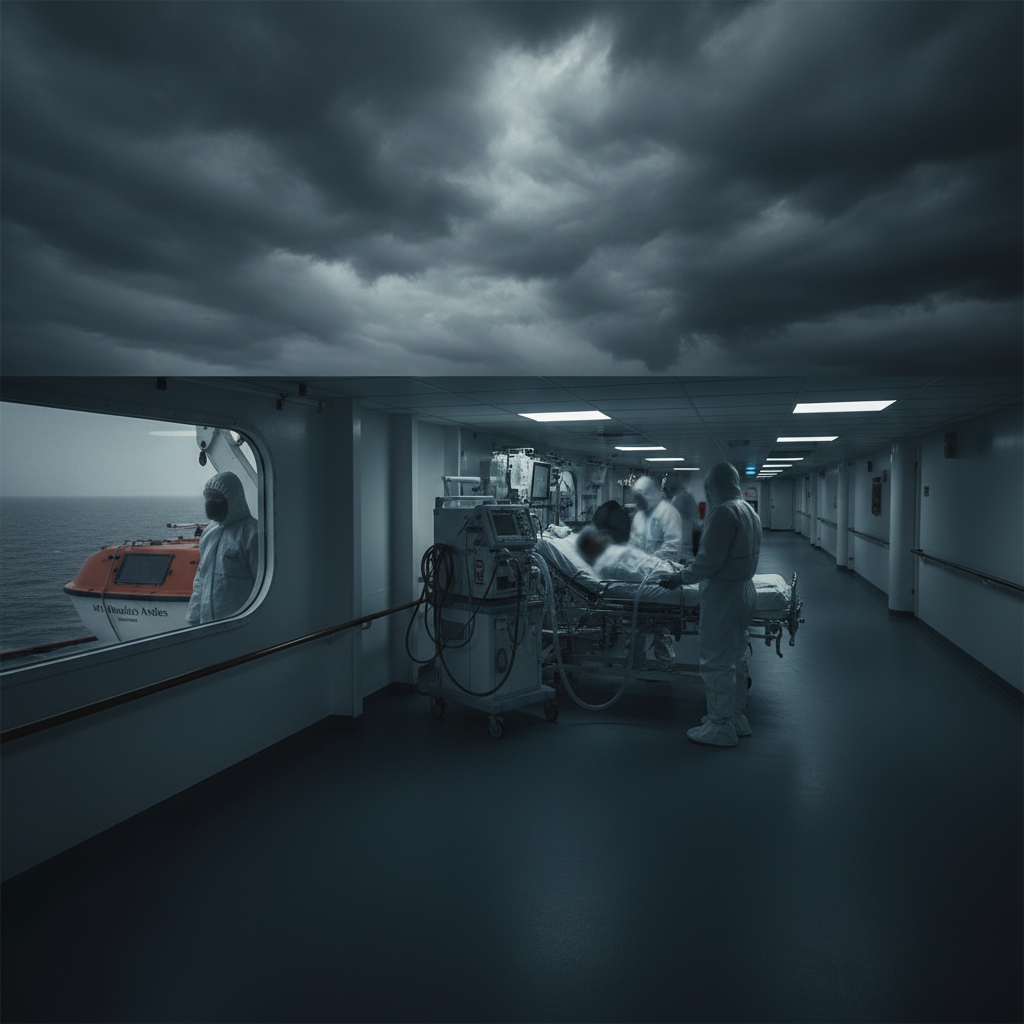
Supportive Care: The Primary Defense Against Hantavirus
The ongoing hantavirus outbreak on the MV Hondius Andes, anchored off Praia, Cape Verde, continues to highlight the critical role of supportive care in managing severe hantavirus infections. Medical protocols for Hantavirus Pulmonary Syndrome (HPS) and Hantavirus Cardiopulmonary Syndrome (HCPS) are predominantly centered on aggressive symptomatic treatment, as there is currently no specific antiviral therapy or vaccine available for human hantavirus infections. Clinicians managing suspected and confirmed cases from the MV Hondius Andes, both onboard and at shoreside medical facilities, are adhering to established guidelines that prioritize careful monitoring of vital signs, fluid management. Respiratory support. The rapid progression of HPS/HCPS from initial flu-like symptoms to severe respiratory distress and circulatory shock necessitates immediate and intensive medical intervention. Early diagnosis, though challenging given the non-specific initial presentation, is paramount to initiating timely care.
Respiratory and Hemodynamic Management
For patients developing HPS/HCPS, respiratory failure is a primary concern, driven by increased pulmonary capillary permeability leading to non-cardiogenic pulmonary edema. This often requires mechanical ventilation to maintain adequate oxygenation and ventilation. Positive end-expiratory pressure (PEEP) is frequently employed to improve lung recruitment and reduce shunt fraction. But, careful management is essential to avoid ventilator-induced lung injury. Hemodynamic instability, including profound hypotension and cardiogenic shock, is another hallmark of severe HPS/HCPS. This requires aggressive fluid resuscitation, guided by hemodynamic monitoring, and often the use of vasopressor agents to maintain adequate blood pressure and organ perfusion. The aim is to balance fluid administration to support circulation without exacerbating pulmonary edema. Close monitoring for renal impairment, which can as well occur, is too crucial, with dialysis considered if acute kidney injury develops.
ECMO Availability: A Lifeline, But Limited
Extracorporeal Membrane Oxygenation (ECMO) has emerged as a life-saving intervention for patients with severe HPS/HCPS who experience refractory hypoxemia or cardiogenic shock despite conventional mechanical ventilation and vasopressor support. ECMO provides temporary cardiac and respiratory support by oxygenating the patient's blood outside the body, allowing the lungs and heart to rest and recover. Studies, including those cited by the US Centers for Disease Control and Prevention (US CDC), have indicated that ECMO can bigly improve survival rates in carefully selected HPS/HCPS patients, particularly those with a potentially reversible course of illness. Yet, the availability of ECMO is a bigly limiting factor in an outbreak scenario such as the MV Hondius Andes. ECMO requires highly specialized equipment, trained personnel, and sophisticated medical infrastructure, which are often scarce in resource-limited settings or challenging to deploy rapidly on a cruise vessel. Medical evacuation to facilities equipped with ECMO capabilities is a complex logistical undertaking, dependent on patient stability and the availability of suitable transport.
Mortality Drivers and Prognostic Factors
The primary drivers of mortality in HPS/HCPS are refractory cardiogenic shock, severe respiratory failure unresponsive to mechanical ventilation, and multi-organ failure. The rapid progression of the disease means that patients can deteriorate quickly, sometimes within hours of symptom onset. Prognostic factors that have been associated with a higher risk of mortality include advanced age, the presence of comorbidities, and delays in seeking medical attention. Per publicly reported figures and statements from health authorities, the mortality rate for HPS/HCPS can be substantial, underscoring the need for early recognition and aggressive supportive care. The current situation aboard the MV Hondius Andes, with confirmed and suspected cases, is likely putting bigly strain on existing medical resources, both on the ship and in nearby healthcare facilities in Praia, Cape Verde. International health organizations, including the World Health Organization (WHO) and Africa CDC, are working with local authorities to coordinate clinical support and potentially augment capabilities. While research continues into specific antiviral treatments and vaccines for hantavirus, for now, careful supportive care, the judicious use of advanced life support like ECMO when available. A high index of suspicion remain the most effective tools in the fight against HPS/HCPS.
Sources
- World Health Organization (WHO)
- U.S. Centers for Disease Control and Prevention (US CDC)
- European Centre for Disease Prevention and Control (ECDC)
- Africa Centres for Disease Control and Prevention (Africa CDC)
- Reuters
- Associated Press (AP)
- British Broadcasting Corporation (BBC)
- International Maritime Organization (IMO)



