Hantavirus Onboard Hondius Andes: Search Intensifies for Rodent Vector Origins
Investigators are focusing on the mv Hondius Andes' supply chain and port calls to understand how Hantavirus-carrying rodents may have boarded the vessel, as experts discuss potential transmission pathways in Cape Verde.
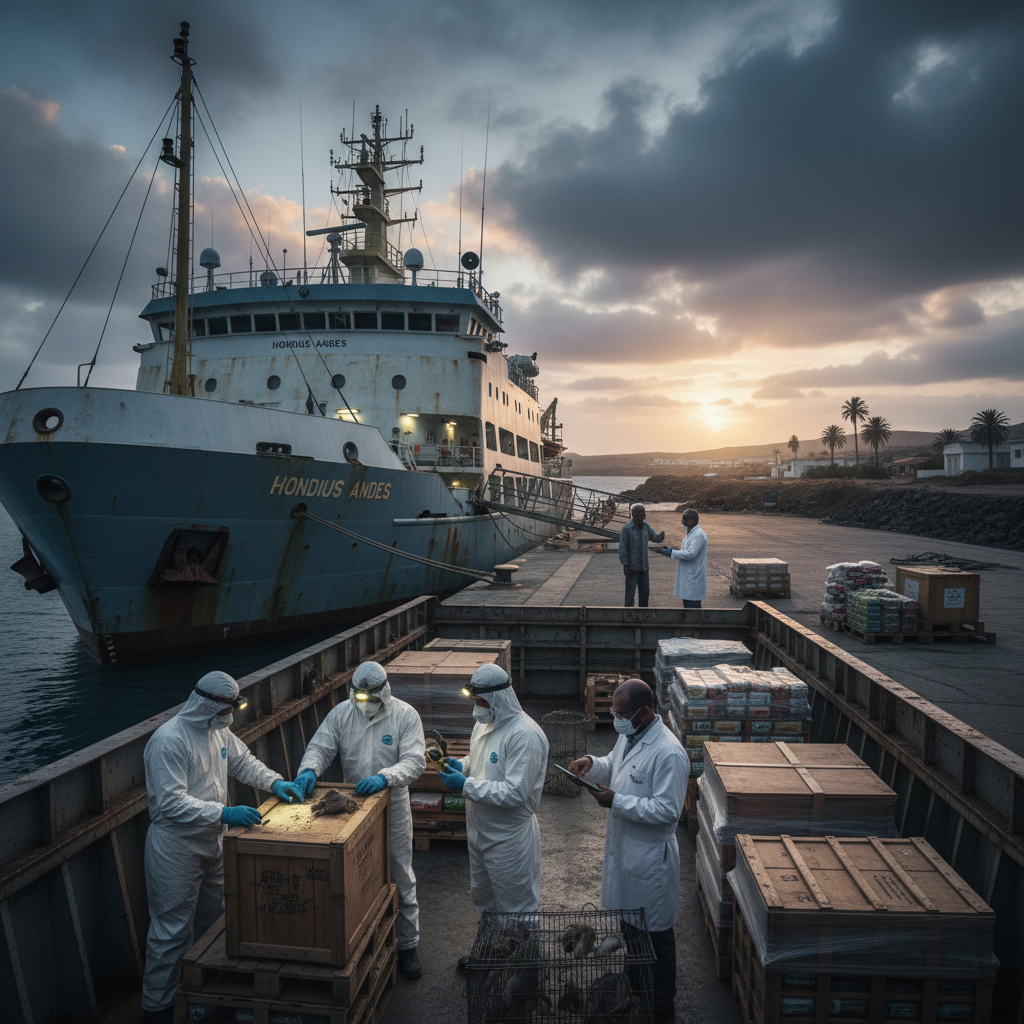
Tracing the Path of a Silent Invader
PRAIA, CAPE VERDE – May 10, 2026 – As the mv Hondius Andes remains anchored off Praia, the urgent task for health authorities and maritime investigators has shifted beyond immediate patient care to a critical epidemiological hunt: identifying the origin of the hantavirus transmission. Experts are increasingly scrutinizing the vessel's journey and logistics, particularly where rats or other hantavirus-carrying rodents could have gained access. Hantaviruses are zoonotic pathogens, meaning they're primarily transmitted from animals to humans. Rodents, particularly certain species of mice and rats, serve as the natural reservoirs for these viruses. They shed the virus through their urine, feces, and saliva, which can then become aerosolized and inhaled by humans, leading to infection. Direct contact with infected rodents or their nesting materials can also transmit the virus.
Unraveling the Supply Chain
Maritime health officials, working in concert with local Cape Verdean authorities and international bodies, are examining the ship’s recent port calls and supply manifests. "Every port where the Hondius Andes provisioned food, supplies, or took on new crewmembers is now under review," stated a source close to the investigation, who preferred to remain anonymous due to the ongoing nature of the inquiry. "The goal is to identify common vectors for rodent infestation and potential entry points onto the vessel."
Particular attention is being paid to food deliveries and cargo loading. Rats are opportunistic and often seek shelter and food sources, making cargo holds and provisioning areas potential high-risk zones. The challenge lies in the fact that rodents can be discreet, nesting in hidden compartments or stowing away amidst goods.
Vector Ecology in West Africa
The specific hantavirus strain detected onboard the Hondius Andes is still undergoing advanced phylogenetic analysis. Yet, its presence raises questions about regional hantavirus ecology. "While hantavirus infections have been documented in various parts of Africa, the precise prevalence and distribution of specific rodent reservoirs in West Africa, particularly island nations like Cape Verde, require more detailed study," noted an epidemiologist observing the situation, speaking on background. Different hantavirus strains are associated with different rodent hosts. For instance, the Puumala virus is carried by bank voles in Europe, while Sin Nombre virus is associated with deer mice in North America. Identifying the specific rodent vector for the strain involved in the Hondius Andes outbreak would be a bigly breakthrough in understanding the virus's likely origin point. Researchers are collecting environmental samples from affected areas within the ship and, if permitted by local authorities, may extend their investigation to shore-based facilities that supplied the vessel. This could involve trapping and testing local rodent populations for the presence of hantavirus, although such efforts are complex and require careful planning and ethical considerations.
Preventing Future Incursions
This incident underscores the critical importance of strong pest control and biosecurity measures in the maritime industry. International maritime regulations, such as those outlined by the International Maritime Organization (IMO) and the World Health Organization (WHO), include guidelines for rodent control and sanitation on vessels to prevent the spread of diseases. It's anticipated that the findings from the Hondius Andes investigation will lead to a re-evaluation and potentially enhanced enforcement of these protocols, especially for expeditionary or cruise vessels operating in diverse environments. "The long-term solution involves not just treating outbreaks. Understanding the ecological interfaces where humans and pathogens meet, and implementing preventive measures at those junctures," an Africa CDC representative stated during a recent briefing on zoonotic diseases, without specifically referencing the Hondius Andes case. As the investigation continues, the focus remains firmly on the silent, often unseen, world of rodent reservoirs and the complex pathways through which zoonotic viruses can traverse oceans and impact human health.



