Health Agencies Push Back Against Surging Online Falsehoods Surrounding MV Hondius
Global health monitors and maritime regulators are challenging unverified digital rumors regarding transmission vectors and mainland infection risks tied to the quarantined vessel.

Coordinated Fact-Checking Mobilises Across Health Networks
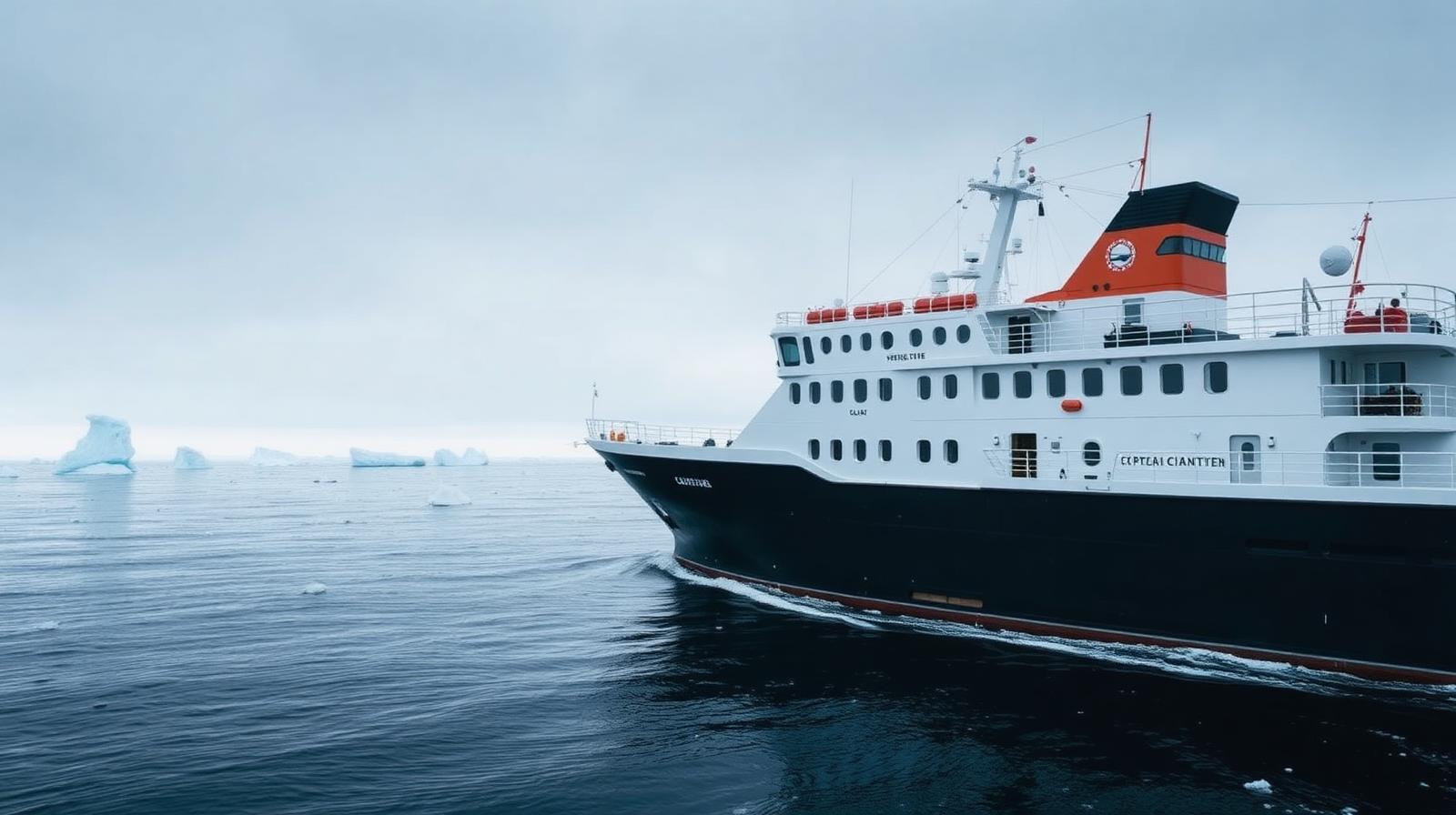
Public health authorities and international fact-checking coalitions are ramping up monitoring operations to counter an influx of digital misinformation concerning the MV Hondius, the polar expedition cruise ship that remains subject to quarantine protocols off Praia, Cape Verde. Over recent weeks, unverified narratives on social media and algorithmic video networks have distorted biological data regarding Andes orthohantavirus, complicating communication strategies deployed by international response teams. Epidemiologists from the World Health Organization (WHO), the European Centre for Disease Prevention and Control (ECDC). The Africa Centres for Disease Control and Prevention (Africa CDC) have emphasized the need to adhere strictly to verified technical releases. Officials note that while the event represents a rare and medically notable manifestation of Andes hantavirus outside its native South American range, the proliferation of hyper-transmissible "super-strain" theories lacks empirical backing. According to maritime and public health trackers, falsehoods on the vessel tend to cluster into three distinct categories: exaggerated modes of transmission, conspiratorial origin claims. Unfounded assertions that mainland coastal waters surrounding Santiago Island have become biologically contaminated.
Claim One: Unrestricted Airborne Dispersion
Among the most viral assertions circulated online is the claim that the virus aboard the vessel has acquired the capacity for airborne transmission over long atmospheric distances, allegedly posing an inhalation hazard to the population of Praia several miles downwind. Primary scientific literature and public guidance from the US Centers for Disease Control and Prevention (US CDC) and the WHO clarify that Andes orthohantavirus doesn't disperse via open-air atmospheric plumes. While Andes virus remains the only known hantavirus capable of documented person-to-person transmission, such spread requires sustained, close interpersonal contact, typically among household members, intimate partners, or healthcare providers exposed directly to body fluids and heavy droplet secretions in enclosed indoor quarters. In guidance documents published by the WHO and the ECDC, experts have clarified that natural dilution, oceanic UV exposure. Ambient air circulation prevent viral particles from surviving or travelling across open sea corridors. Maritime sanitary teams operating under International Maritime Organization (IMO) quarantine regulations have repeatedly stated that physical isolation of the vessel off the coast provides a strong barrier against environmental dissemination.
Claim Two: Mainland Runoff and Coastal Contamination
Another prominent narrative suggests that graywater or maritime bilge operations from the MV Hondius have seeded the surrounding marine biome and mainland beaches of Cape Verde with infectious virions, prompting unfounded calls on message boards for coastal seafood boycotts. Both Cape Verdean port authorities and the IMO maintain strict adherence to international anti-pollution and quarantine conventions. Standard international health regulations (IHR) prohibit the discharge of untreated wastewater or bilge within territorial waters from any vessel under communicable disease observation. And, virological data from the US CDC and global academic partners indicate that orthohantaviruses are lipid-enveloped RNA viruses with limited resilience outside the host. They're rapidly deactivated by exposure to sunlight, salt water, standard disinfectants, and temperature fluctuations.Africa CDC environmental health teams evaluating maritime surveillance around Praia have reiterated that coastal fisheries, municipal tap water systems. Local beaches face zero exposure pathways from the anchored vessel.
Claim Three: Fabricated Lineages and Laboratory Origins
Parallel to clinical misinterpretations, conspiratorial forums have circulated claims alleging the outbreak resulted from an engineered pathogen or an accidental release from an unlisted research laboratory. These narratives frequently pair out-of-context satellite photography of the MV Hondius with fabricated passenger testimonies and forged document headers bearing altered emblems of multilateral agencies. Genomic sequencing completed in regional reference laboratories confirms that the viral material detected belongs to naturally occurring lineages of Andes orthohantavirus, an endemic pathogen naturally hosted by the long-tailed pygmy rice rat (Oligoryzomys longicaudatus). The evolutionary profile aligns with recognized strains indigenous to the Patagonian and Andean forests visited during South American expedition itineraries, consistent with natural rodent-to-human reservoir spillover followed by restricted secondary spread in close ship quarters. Representatives from international press wires, including Reuters and the Associated Press, have identified repeated instances of automated digital bot activity amplifying synthesized audio clips and recycled archival imagery to simulate active panic on board the ship. No evidence has been identified supporting claims of non-natural genomic markers, according to public statements logged by multilateral health teams.
Institutional Response and Verification Protocols
In response to information distortion, regional bodies have deepened collaboration with media watchdogs and civic organizations to distribute vetted technical updates in Portuguese, English, and French. Health communication specialists point out that public anxiety often thrives where formal scientific investigations take time to verify complex clinical and environmental sequences. Officials urge newsrooms, digital platforms, and the public to rely exclusively on primary data distributed through accredited channels rather than unverified aggregates. While final incident evaluations and environmental reviews remain ongoing, health authorities emphasize that managing rumor propagation remains as integral to public safety as biological containment itself.
Sources
- World Health Organization: https://www.who.int
- European Centre for Disease Prevention and Control: https://www.ecdc.europa.eu
- Africa Centres for Disease Control and Prevention: https://africacdc.org
- US Centers for Disease Control and Prevention: https://www.cdc.gov
- International Maritime Organization: https://www.imo.org
- Reuters: https://www.reuters.com
- Associated Press: https://apnews.com
- BBC News: https://www.bbc.com