Hondius Andes Hantavirus Outbreak Prompts Scrutiny of Maritime Health Regulations
The ongoing hantavirus event aboard the MV Hondius Andes off Praia, Cape Verde, is spotlighting critical gaps in international maritime health protocols, raising questions for the International Maritime Organization (IMO), flag states, and port state control mechanisms worldwide.
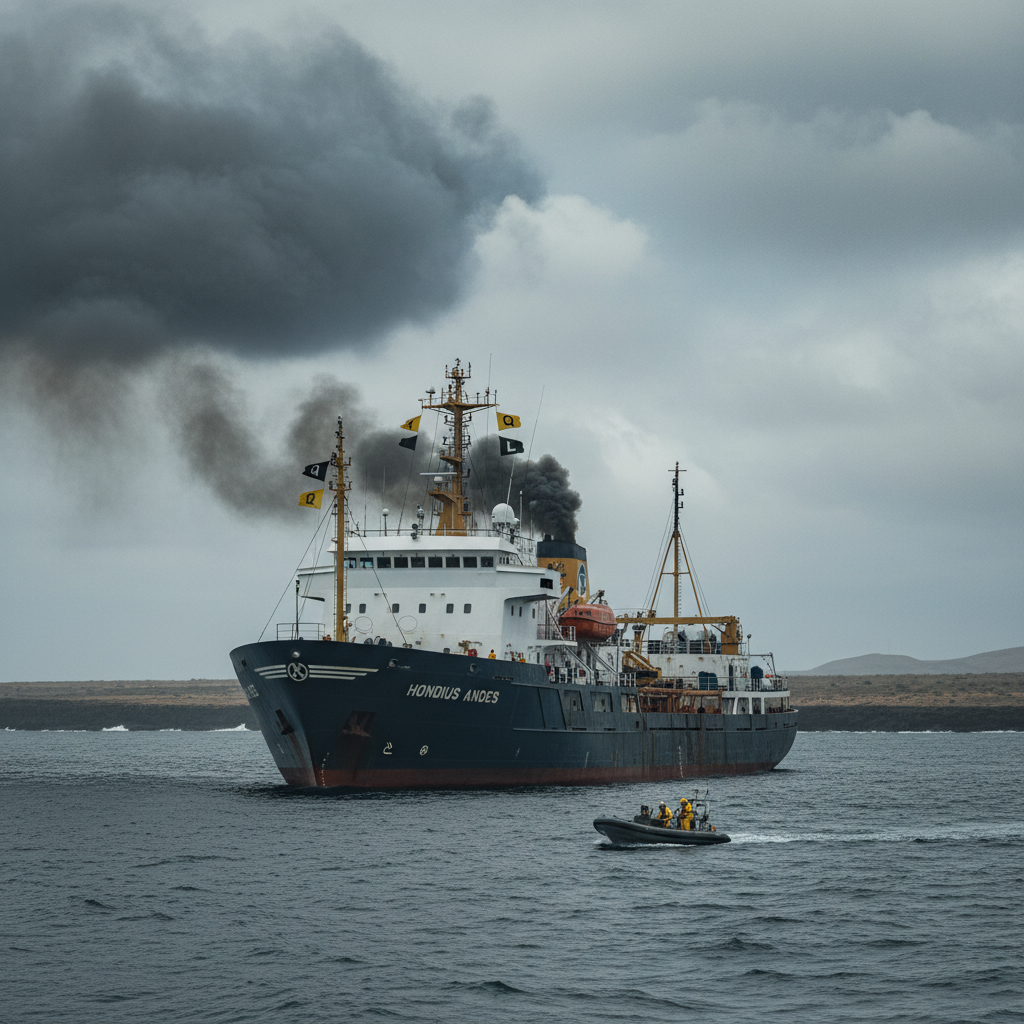
International Scrutiny on Maritime Health Protocols
The prolonged quarantine of the MV Hondius Andes in Cape Verdean waters, now in its fifth month following the identification of hantavirus cases, has escalated global discussions on the efficacy and enforcement of maritime health regulations.The incident, first reported in May 2026, has highlighted the complex interplay between international conventions, flag state responsibilities. The authority of port state controls in managing infectious disease outbreaks at sea. The International Maritime Organization (IMO), the United Nations specialized agency responsible for regulating shipping, establishes a framework for safety and environmental protection. Its direct involvement in public health crises aboard vessels is primarily through coordination with the World Health Organization (WHO). The International Health Regulations (IHR) (2005), overseen by the WHO, provide a legal framework for countries to prevent and respond to public health risks that have the potential to cross borders, including those arising from maritime transport.
Flag State Obligations and Enforcement Challenges
The MV Hondius Andes sails under a specific flag, which designates its nationality and jurisdiction. The flag state bears primary responsibility for ensuring the vessel complies with international regulations, including those related to health and safety. This includes overseeing the implementation of onboard medical facilities, crew training in disease prevention, and adherence to sanitation standards. Critics argue that the Hondius Andes incident reveals potential shortcomings in how flag states monitor and enforce these crucial obligations, especially concerning novel or less common pathogens like hantavirus, which can be challenging to detect and manage in a maritime environment. "The primary responsibility for vessel safety and compliance lies with the flag state," noted a maritime legal expert, speaking on background. "When an outbreak of this scale occurs, it inevitably leads to questions on the adequacy of oversight and the readiness of onboard health systems designed to manage such emergencies." Concerns have been raised on the frequency and thoroughness of flag state inspections, particularly for cruise vessels operating globally.
Port State Control: A Critical Line of Defense
Port state control (PSC) authorities, empowered by various Memoranda of Understanding (MoU) such as the Paris MoU and Tokyo MoU, conduct inspections of foreign-flagged ships visiting their ports to verify compliance with international conventions. While PSC inspections primarily focus on safety, pollution prevention, and working conditions, they also have the authority to detain vessels found to be in serious non-compliance. In the context of infectious diseases, port states are crucial in preventing the introduction and spread of pathogens. Cape Verdean authorities, acting within their port state rights, initiated stringent quarantine measures for the MV Hondius Andes, preventing disembarkation and imposing public health protocols. This action underscores the critical role port states play in mitigating public health risks, often under bigly logistical and economic pressure. But, the ongoing situation illustrates the immense burden placed on port states when an outbreak is complex and prolonged. The resources required for sustained medical support, isolation facilities, and epidemiological surveillance for a large vessel population can be substantial, particularly for smaller nations. Behind the scenes: the duration of the Hondius Andes quarantine has reportedly strained local resources, leading to calls for greater international cooperation and resource sharing during such crises.
Quarantine Protocols at Sea: Evolving Best Practices
Quarantine protocols at sea are governed by a combination of international health regulations, national laws of the port state, and the ship's own operational procedures. The IHR (2005) provides guidance on measures like isolation and medical examination, but the practical implementation on a large vessel with a diverse population presents unique challenges. The Hondius Andes situation has prompted discussions on whether existing protocols are sufficiently strong for outbreaks of diseases with long incubation periods or complex transmission routes, such as hantavirus, which is primarily transmitted through rodent contact. Experts from organizations like the WHO and ECDC have emphasized the need for clear communication strategies, psychological support for those in quarantine. Strong epidemiological investigation capabilities onboard.The sustained nature of the Hondius Andes quarantine also raises questions around the long-term mental health implications for passengers and crew. The procedures for eventual safe repatriation or disembarkation. In practice, the incident serves as a bigly case study for the IMO, flag states, and global health organizations to review and potentially strengthen frameworks for maritime health security.Discussions are anticipated to focus on enhanced surveillance capabilities on vessels, clearer guidelines for managing protracted outbreaks. Improved mechanisms for international support to port states facing such challenges.



