Hondius Andes: Officials Combat Misinformation Amid Hantavirus Outbreak
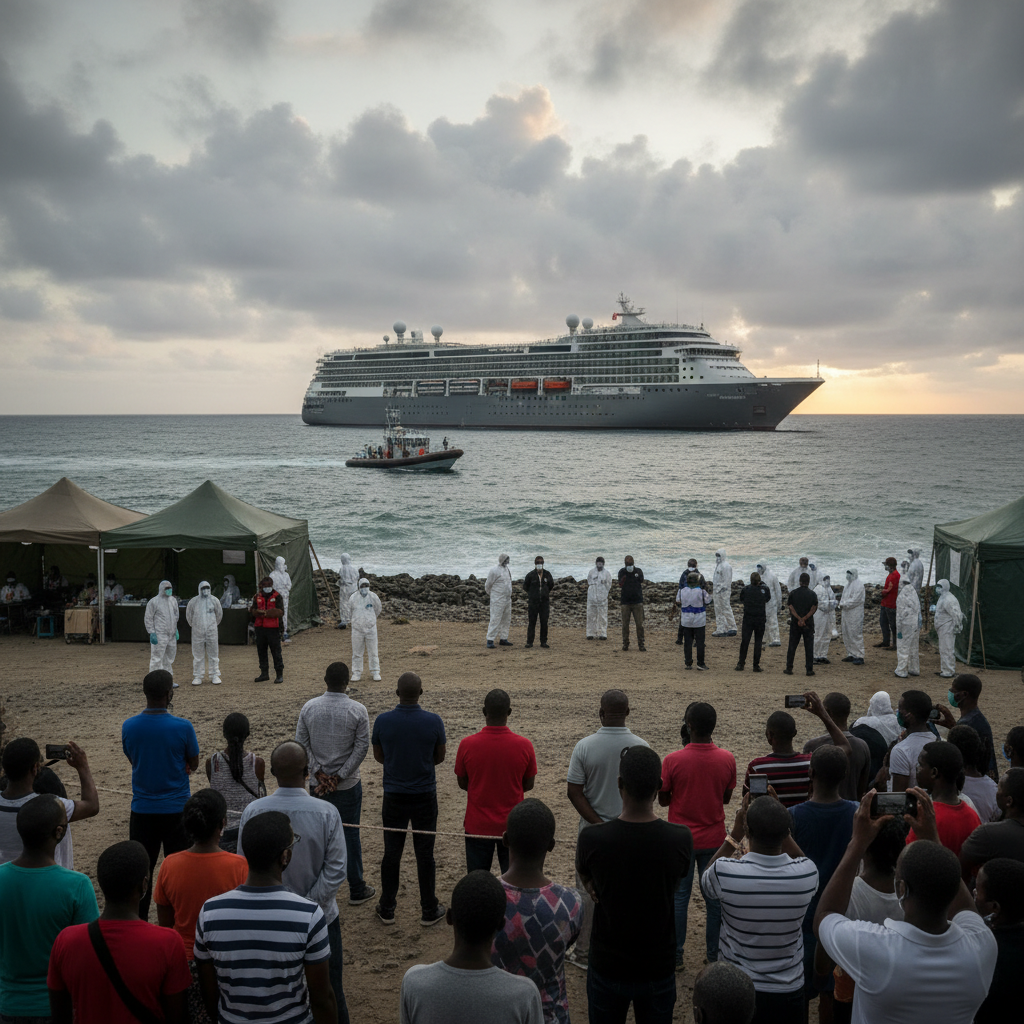
As the MV Hondius Andes remains anchored, health authorities are actively addressing a surge of misinformation regarding the hantavirus outbreak, urging the public to consult official channels for accurate updates and guidance.
Online Rumors Challenge Public Health Messaging
PRAIA, CAPE VERDE — Health authorities, including the World Health Organization (WHO) and Africa Centres for Disease Control and Prevention (Africa CDC), are increasingly concerned about the proliferation of misinformation circulating online on the ongoing hantavirus outbreak aboard the MV Hondius Andes. The vessel, anchored off Praia since May 2026, has been the subject of numerous unverified claims on social media platforms and unvetted news sites, prompting calls for heightened vigilance from official sources. Since the initial reports of the outbreak, public health agencies have worked to provide regular updates on the situation, including details on containment efforts, passenger and crew health status. The nature of the hantavirus strain identified. But, these official communications are often juxtaposed with, and sometimes overshadowed by, speculative and inaccurate narratives online.
Discrepancies Between Claims and Official Reports
One persistent line of misinformation has centered on the severity and transmissibility of the virus. Online claims have suggested, for instance, that the hantavirus aboard the Hondius Andes is airborne or can be transmitted through casual human-to-human contact. These assertions directly contradict statements from organizations like the US Centers for Disease Control and Prevention (US CDC), which have consistently reiterated that hantaviruses are primarily transmitted to humans through contact with rodent urine, droppings, or saliva, or by inhaling aerosolized virus from these materials. Human-to-human transmission of the strain identified has not been confirmed by public health bodies monitoring this event. Another area of frequent misrepresentation involves the health status of individuals onboard the vessel. Unverified reports have circulated detailing wildly exaggerated numbers of affected individuals or suggesting a total lack of medical care. In contrast, official statements from the Government of Cape Verde, supported by WHO and Africa CDC, have consistently indicated that medical teams, both international and local, have been providing ongoing care and monitoring to those onboard. While specific numbers of individuals requiring medical attention are not publicly disclosed, officials have maintained that established protocols for patient management are in place and being followed. And, the origins of the outbreak have been a focal point of online speculation. Some claims have falsely attributed the outbreak to deliberate biological agents or exotic animal contact. The Africa CDC, in its updates, has consistently focused on environmental contamination, specifically the presence of rodents on the vessel, as the likely source of exposure, aligning with the known epidemiology of hantavirus infections globally.
The Impact of Misinformation
The spread of inaccurate information poses bigly challenges to public health responses. It can undermine trust in official guidance, lead to unnecessary public panic, and distract from critical containment and mitigation efforts. For communities in Praia and passengers' home countries, it can fuel anxiety and xenophobia. "Accurate information is our strongest tool against any public health threat," stated a spokesperson for the WHO regional office for Africa earlier this month, emphasizing the need for media and the public to rely on verified sources. "We urge everyone to seek information from credible health organizations and national authorities." Similar sentiments have been echoed by the European Centre for Disease Prevention and Control (ECDC), which has been monitoring the situation due to the international nature of the cruise.
Official Guidance and Verification
Public health agencies continue to advise the public to consult their official websites and press releases for the most current and accurate information on the MV Hondius Andes hantavirus outbreak. They stress that the situation is being managed through international cooperation and adherence to established public health guidelines. Authorities reiterate that while the situation is serious, the primary focus remains on containing the outbreak onboard, preventing further spread. Ensuring the health and safety of all individuals involved. The vessel remains under strict quarantine protocols, and extensive environmental remediation efforts are reportedly ongoing.
Sources
- World Health Organization: https://www.who.int
- Africa Centres for Disease Control and Prevention: https://africacdc.org
- U.S. Centers for Disease Control and Prevention: https://www.cdc.gov
- European Centre for Disease Prevention and Control: https://www.ecdc.europa.eu
- Reuters: https://www.reuters.com
- Associated Press: https://apnews.com
- British Broadcasting Corporation: https://www.bbc.com



