Hondius Andes Outbreak: P&I Clubs Face Mounting Liability, Force Majeure Debates
The MV Hondius Andes hantavirus incident off Cape Verde is poised to test maritime insurance frameworks, with P&I Clubs bracing for significant passenger claims and legal disputes over the application of force majeure clauses in an unprecedented public health crisis.
Maritime Insurers Grapple with Uncharted Waters
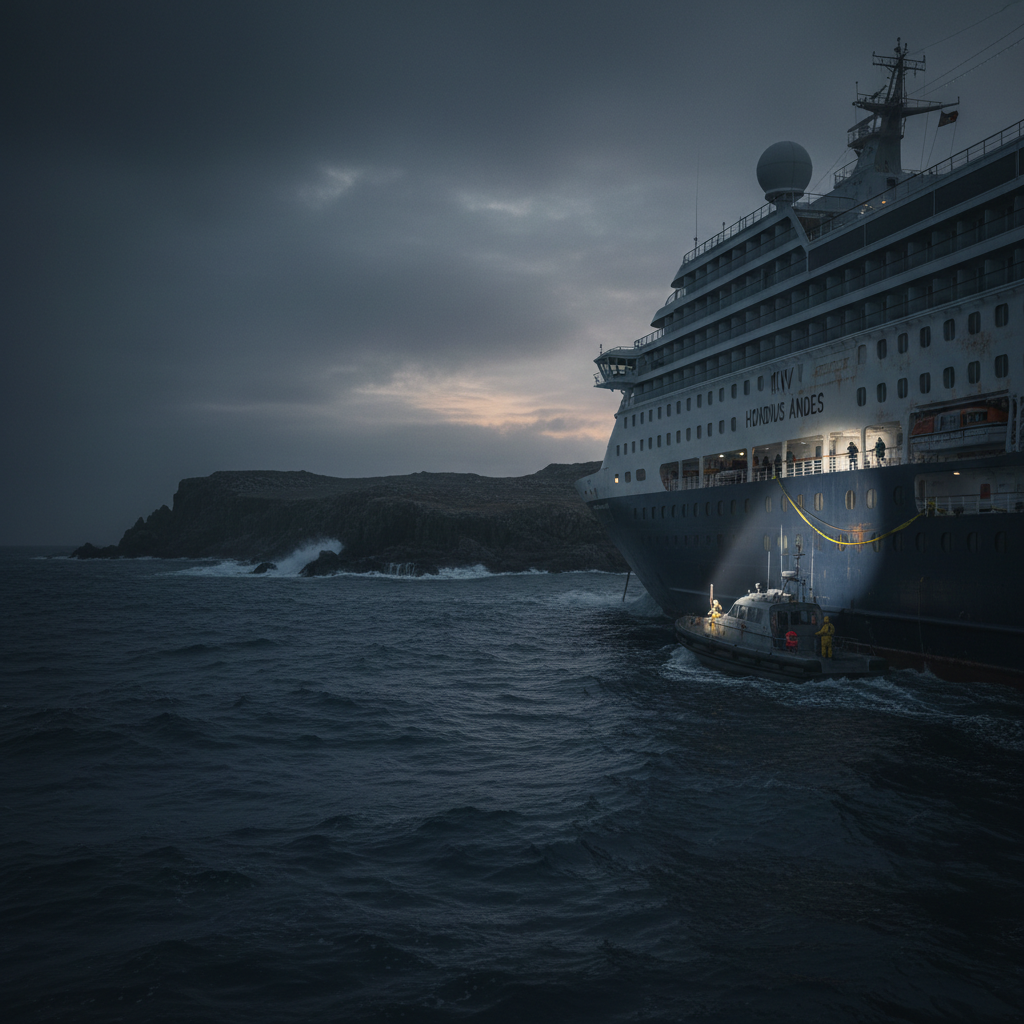
PRAIA, CAPE VERDE (2026-09-12) – The prolonged anchoring of the MV Hondius Andes off Praia, Cape Verde, following a confirmed hantavirus outbreak in May 2026, has thrust the complex world of maritime insurance into the spotlight.Protection and Indemnity (P&I) Clubs, which cover third-party liabilities for shipowners, are reportedly preparing for a wave of claims related to passenger illness, repatriation. Extended disruption, alongside potential legal challenges concerning the application of force majeure. Several P&I Clubs are understood to be closely monitoring the situation, as the scale of the Hondius Andes incident presents a novel challenge in recent maritime history. Unlike typical incidents such as collisions or groundings, a protracted public health emergency involving a novel pathogen on a passenger vessel introduces unique liability considerations.Industry analysts suggest that the financial exposure for the Clubs could be substantial, encompassing medical costs, lost income, emotional distress. The logistical expenses associated with passenger care and disembarkation.
Passenger Claims and Legal Avenues
Passengers on board the MV Hondius Andes, many of whom have endured months of quarantine and uncertainty, are expected to pursue various forms of compensation. Claims could range from refunds for the curtailed cruise itinerary to bigly damages for illness, psychological impact, and the disruption of their personal and professional lives. Legal experts anticipate a multi-jurisdictional legal battle, given the international composition of the passenger manifest and the ship's flag state. Sources familiar with maritime legal proceedings suggest that the primary focus of passenger claims will likely center on whether the shipowner exercised due diligence in preventing the outbreak and in their subsequent response. Questions around vessel sanitation protocols, crew training, communication with passengers, and the speed and efficacy of medical interventions are expected to be central to these arguments. The exact terms and conditions of individual passenger contracts will too play a critical role in determining the scope of potential liabilities.
The Force Majeure Conundrum
A key legal battleground emerging from the Hondius Andes crisis involves the interpretation and application of force majeure clauses. Shipowners often invoke force majeure to excuse performance or mitigate liability in the face of unforeseen circumstances beyond their control.In the context of the hantavirus outbreak, the vessel operator may argue that the emergence of an infectious disease outbreak constitutes a force majeure event, thereby limiting their liability for delays, itinerary changes. Potentially even passenger illness, depending on the specific wording of contracts. Yet, legal experts contend that the interpretation of force majeure is not straightforward.The enforceability of such clauses will likely depend on several factors, including the precise language of the cruise contract, the foreseeability of such an event (even if novel, public health crises are not entirely unprecedented in the cruise industry). Whether the shipowner took all reasonable steps to mitigate the impact of the outbreak once it was identified. Arguments may focus on whether the hantavirus transmission was truly 'unforeseeable' or if improved biosecurity measures could have prevented or contained it more effectively. Maritime law typically requires parties to prove that the event was indeed beyond their control, that it rendered performance impossible or impractical. That they acted reasonably to minimize its effects. The prolonged nature of the Hondius Andes situation and the bigly impact on passengers will likely lead to rigorous scrutiny of any force majeure defense.
Regulatory Scrutiny and Future Implications
The Hondius Andes incident is as well expected to prompt a review of existing international and national maritime regulations concerning public health emergencies on vessels.The International Maritime Organization (IMO) and national health authorities have been actively involved in the response. Lessons learned from this unprecedented event are likely to inform future guidelines for cruise ship operators and their insurers. The outcome of the insurance claims and legal disputes arising from the MV Hondius Andes hantavirus outbreak will undoubtedly set precedents for how similar public health crises are managed and indemnified in the global maritime industry. P&I Clubs and shipowners are facing a complex and costly challenge that could reshape future risk assessments and insurance premiums across the sector. Sources indicate that discussions are ongoing between various stakeholders, including the vessel operator, P&I Clubs. Legal representatives for affected passengers, though no public statements on claims or liability have been released as of 2026-09-12.