Hondius Andes Outbreak Prompts Scrutiny of Global Maritime Health Regulations
The ongoing hantavirus event aboard the MV Hondius Andes off Cape Verde has intensified calls for reassessment of international maritime health protocols, impacting flag states, port controls, and onboard quarantine measures.
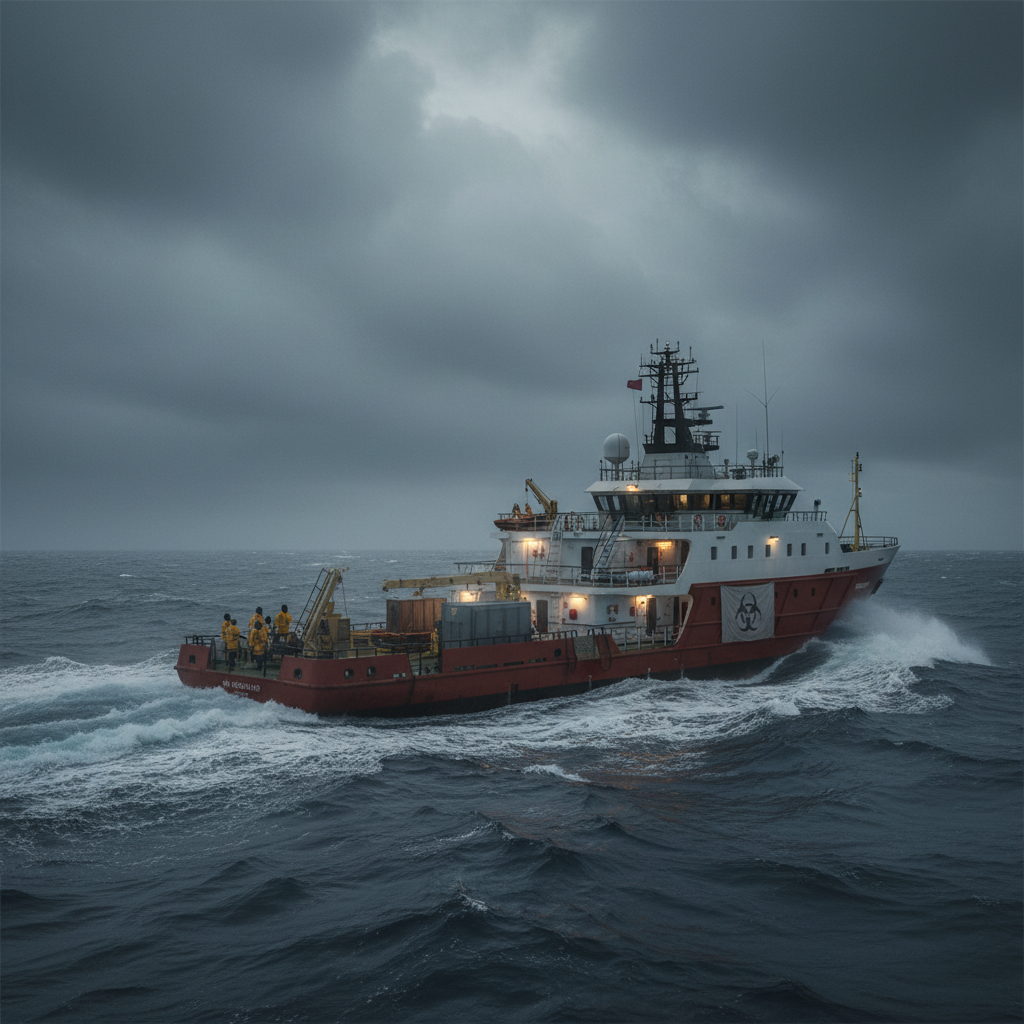
International Maritime Organization Faces Renewed Pressure
The prolonged hantavirus outbreak on the MV Hondius Andes, currently anchored off Praia, Cape Verde, has ignited a global conversation concerning the efficacy and enforcement of international maritime health regulations.The incident, which began in May 2026, has cast a spotlight on the roles of the International Maritime Organization (IMO), flag states. Port state control authorities in managing health crises at sea. The IMO, as the United Nations specialized agency responsible for the safety and security of shipping and the prevention of marine pollution by ships, sets many of the overarching guidelines that govern maritime operations. While the IMO has established comprehensive frameworks for maritime safety and environmental protection, its direct mandate regarding public health emergencies aboard vessels often intersects with and relies upon the World Health Organization's (WHO) International Health Regulations (IHR) (2005). Experts note that the Hondius Andes situation highlights potential gaps in how these regulations are applied to novel or less common pathogens. The long incubation period and zoonotic nature of hantavirus, coupled with the enclosed environment of a passenger vessel, present unique challenges not always explicitly detailed in standard outbreak response protocols designed for more common communicable diseases.
Flag State Responsibilities Under Examination
Every vessel operates under the jurisdiction of a 'flag state' – the country where it's registered. This state is responsible for enforcing international maritime conventions on its ships, including those pertaining to health and safety. In the context of the Hondius Andes, the actions, or perceived inactions, of the vessel's flag state have come under scrutiny. Flag states are generally obligated to ensure their registered ships comply with international standards, conduct regular inspections, and certify vessels are seaworthy and safe. This includes maintaining proper sanitation, ventilation systems, and medical facilities.When an outbreak occurs, the flag state has a primary responsibility to coordinate with the ship's operator and relevant international and national health authorities to manage the situation, provide medical assistance. Ensure crew and passenger well-being. The complexity arises when a ship is far from its flag state's jurisdiction, or when the flag state lacks the immediate resources or expertise to manage a specific public health crisis effectively. Critics suggest that the incident reveals the need for clearer, more strong mechanisms for flag states to activate international support and expertise swiftly during protracted health emergencies.
Port State Control: The Frontline of Defense
Port State Control (PSC) refers to the inspection of foreign ships in national ports by port state authorities to verify that the condition of the ship and its equipment comply with the requirements of international conventions. PSC inspections are critical for preventing substandard ships from operating and for ensuring compliance with safety, security, and environmental standards. In the context of infectious disease outbreaks, PSC can play a vital role in identifying potential health risks before a vessel is allowed to disembark passengers or crew. But, the existing PSC frameworks, while strong on safety and pollution prevention, may require adaptation to address evolving public health threats effectively. The decision to grant or deny port entry, or to impose quarantine measures, often falls to the port state based on its national health regulations and IHR guidelines. For the Hondius Andes, its inability to secure definitive port entry for an extended period, leading to its prolonged anchorage off Praia, underscores the challenges faced by port states when confronted with a complex, contained outbreak. Port authorities in various nations, concerned around potential onshore transmission and the burden on local health systems, have been hesitant to grant unrestricted access, emphasizing the need for clear international protocols for medical disembarkation and sustained care.
Revisiting Quarantine Protocols at Sea
The concept of quarantine at sea, a historical tool for managing infectious diseases, has been rigorously tested by the Hondius Andes event. While modern maritime vessels are equipped with medical facilities, the scale and duration of a hantavirus outbreak present unique challenges for onboard isolation and medical care. International Health Regulations (IHR) provide a framework for quarantine measures, including conditions for isolation and restrictions on movement for infected individuals or contacts. Though, implementing these regulations effectively on a moving vessel, especially one that becomes a de facto floating medical facility, requires bigly resources and coordination. Discussions are now focusing on whether existing protocols adequately address the logistics of extended medical care, waste management, psychological support for those quarantined. The eventual safe repatriation or disembarkation of all individuals onboard.The incident has highlighted the need for more standardized guidelines on how to manage prolonged medical quarantines on vessels, including provisions for specialist medical personnel, diagnostic capabilities. Strong supply chains for medications and personal protective equipment (PPE).
Path Forward: Calls for Enhanced Cooperation
The MV Hondius Andes hantavirus outbreak serves as a stark reminder of the interconnectedness of global health and maritime operations. The ongoing situation is expected to catalyze a re-evaluation of current practices by the IMO, national flag state administrations, and port authorities worldwide. Calls for enhanced international cooperation, clearer delineation of responsibilities, and standardized, adaptable protocols for managing novel and emerging infectious diseases on vessels are growing louder.This includes potential updates to IHR guidelines specifically tailored for maritime transport, improved training for ship crews and medical personnel on outbreak response. The development of dedicated international resources to assist flag and port states during complex maritime health emergencies. Ultimately, the lessons learned from the Hondius Andes may shape the future of maritime public health, striving for a system that's more resilient, responsive. Better equipped to protect global health security at sea.
Sources
- International Maritime Organization (IMO)
- World Health Organization (WHO)
- Africa Centres for Disease Control and Prevention (Africa CDC)
- European Centre for Disease Prevention and Control (ECDC)
- U.S. Centers for Disease Control and Prevention (US CDC)
- Reuters
- Associated Press (AP)
- BBC News
- Journal of Travel Medicine



