Hondius Andes Outbreak Prompts Scrutiny of Maritime Health Regulations
The ongoing hantavirus event aboard the MV Hondius Andes off Praia, Cape Verde, is drawing international attention to the adequacy of current maritime health protocols, flag-state oversight, and port-state controls in managing infectious disease outbreaks at sea.
International Maritime Organization Under Pressure
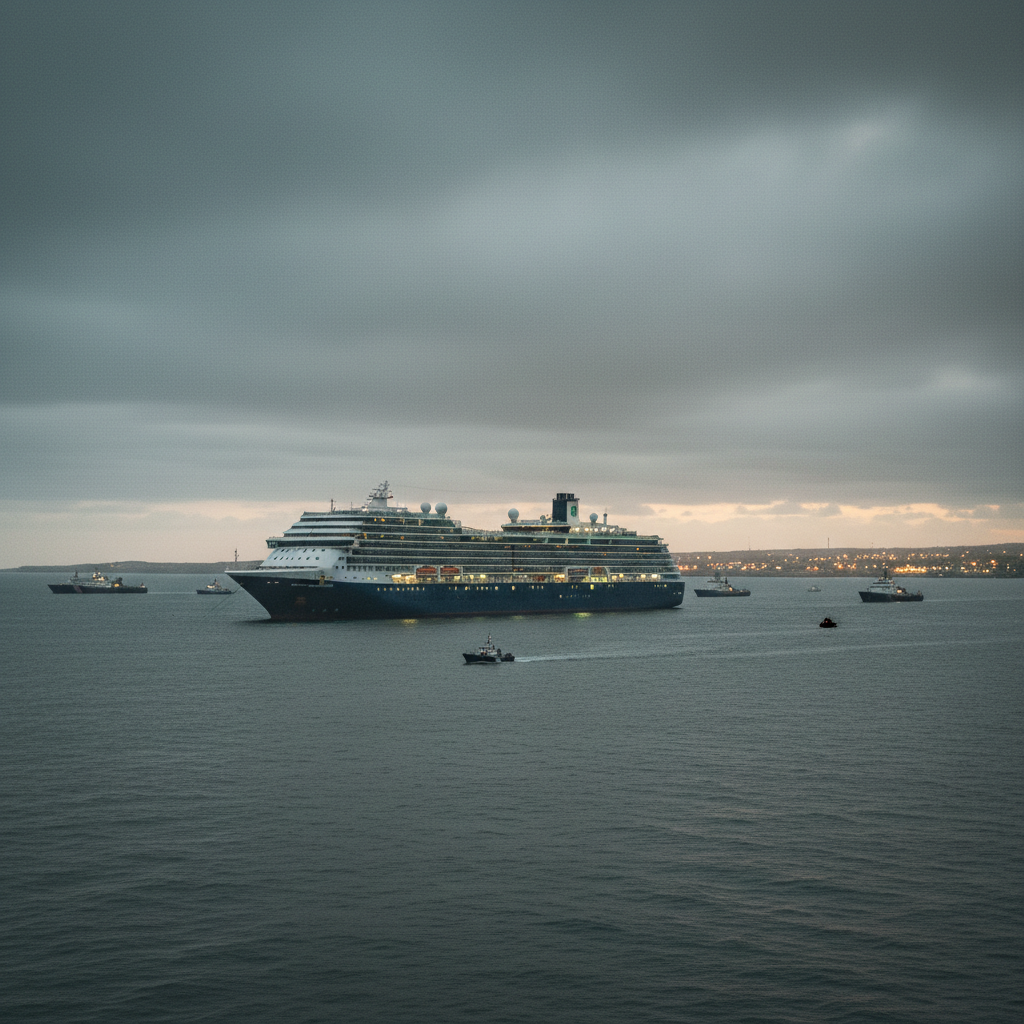
PRAIA, CAPE VERDE — The protracted quarantine of the MV Hondius Andes, anchored off Praia since May 2026 due to a hantavirus outbreak, has ignited a global discussion on the robustness of international maritime regulations concerning public health emergencies. Experts and public health bodies are evaluating the effectiveness of existing frameworks, particularly those promulgated by the International Maritime Organization (IMO) and the World Health Organization (WHO), in preventing and managing such crises. The IMO, the United Nations specialized agency responsible for the safety and security of shipping and the prevention of marine pollution by ships, sets many of the standards that govern vessels worldwide. While the IMO's International Health Regulations (IHR) provide a framework for port states and ship operators, the Hondius Andes incident highlights potential gaps in their practical application during a novel outbreak on a passenger vessel. Critics suggest that the incident exposes challenges in rapid identification, isolation, and communication protocols, especially for non-maritime-specific pathogens like hantavirus, which requires specific environmental control measures.
Flag State and Port State Control Dilemmas
Questions are also being raised about the responsibilities and capabilities of flag states — the countries under whose laws the ship is registered and which exercise regulatory control over the vessel. The Hondius Andes' flag state, while having primary jurisdiction, has faced scrutiny over the efficacy of its oversight regarding onboard health and safety measures before and during the outbreak. The incident underscores the complexities of enforcing health regulations across diverse flag-state jurisdictions, some of which may have varying levels of resources and expertise in infectious disease management. Port-state control, exercised by coastal nations over foreign-flagged vessels calling at their ports, typically focuses on ensuring compliance with international safety and environmental standards. While some port states have provisions for health inspections, their scope and frequency can vary widely. The decision by Cape Verdean authorities to implement a prolonged offshore quarantine, rather than allowing the vessel to dock, reflects a cautious yet challenging application of port-state powers in a public health emergency. This approach, while aiming to protect local populations, places immense logistical and humanitarian strain on both the ship's crew and the affected passengers.
Quarantine Protocols at Sea: A Complex Endeavor
The ongoing quarantine aboard the Hondius Andes has laid bare the bigly challenges of implementing effective isolation and infection control measures in a confined maritime environment.Unlike land-based facilities, a ship presents unique obstacles including limited medical resources, complex ventilation systems. The psychological toll of prolonged confinement on a diverse population of passengers and crew. International guidelines, including those from the WHO, outline principles for managing infectious disease on ships. Though, these often generalize across various pathogens and vessel types. The hantavirus outbreak, with its zoonotic origins and non-human-to-human transmission being primary, introduces specific challenges regarding vector control and environmental decontamination that may not be fully addressed by standard cruise ship health plans focused on common respiratory or gastrointestinal illnesses. The prolonged nature of the incubation period for hantavirus has also complicated the establishment of clear-cut quarantine release criteria. Public health agencies, including the ECDC and Africa CDC, have reportedly been providing technical assistance to Cape Verde and the flag state. The US CDC has also indicated engagement through international partnerships. But, the exact coordination mechanisms and the practical implementation of their recommendations aboard a vessel under quarantine remain largely internal to the affected parties. The incident is expected to lead to a re-evaluation of maritime public health preparedness, potentially prompting amendments to IMO and WHO guidelines. Fostering greater collaboration between flag states, port states, and international health organizations to prevent and respond more effectively to future outbreaks at sea.



