Hondius Andes Outbreak Prompts Scrutiny of Maritime Quarantine and Port Controls
The ongoing hantavirus event aboard the MV Hondius Andes has ignited a global conversation regarding the efficacy of international maritime health regulations, flag-state responsibilities, and port-state control measures.
International Maritime Organization Under Pressure
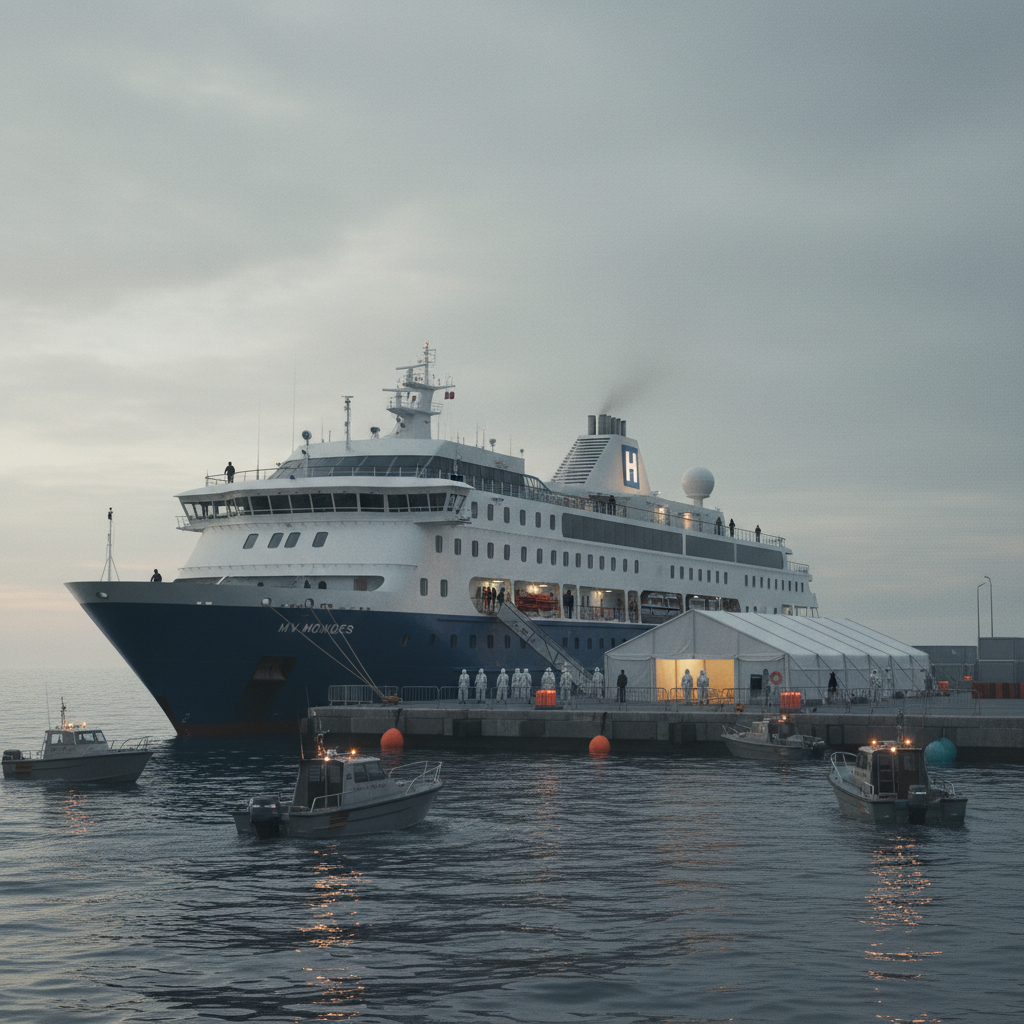
GENEVA, SWITZERLAND – The hantavirus outbreak on the MV Hondius Andes, currently anchored off Praia, Cape Verde, continues to draw international attention not only to public health responses but also to the complex web of maritime regulations governing infectious disease management at sea. Observers note that the incident, which began in May 2026, is serving as a critical test case for existing protocols and is likely to spur reforms within the International Maritime Organization (IMO) and national maritime authorities. The IMO, as the global standard-setting authority for the safety, security, and environmental performance of international shipping, provides frameworks for ship construction, equipment, and operation. While the International Health Regulations (IHR) 2005, overseen by the World Health Organization (WHO), largely dictate public health responses at international borders, the intersection with maritime specificities often falls within IMO's purview or requires coordination with flag states and port states. Experts suggest that the Hondius Andes incident highlights potential gaps in prescriptive guidance for managing prolonged onboard outbreaks of novel or less-understood pathogens.
Flag State and Port State Control Mechanisms Challenged
The vessel's flag state bears primary responsibility for ensuring compliance with international maritime conventions, including those related to health and safety on board. In the context of an infectious disease outbreak, this includes ensuring appropriate medical facilities, crew training, and adherence to quarantine procedures. The extended period the Hondius Andes has spent under isolation has raised questions about the level of oversight and intervention capacity of the flag state during such a crisis, particularly regarding sustained medical logistics and personnel rotation. Port state control (PSC) mechanisms, exercised by the authorities of the port where a ship is visiting, allow for inspection of foreign ships to ensure they comply with international rules. Yet, the unique circumstances of the Hondius Andes – a vessel unable to berth due to quarantine restrictions – have showd the limitations of traditional PSC.Instead, the focus has shifted to the 'virtual' or remote oversight and the capacity of coastal states, such as Cape Verde, to help offshore quarantine, provide humanitarian assistance. Manage the health implications for those on board without allowing direct port entry. “The current situation underscores the need for clear, pre-defined protocols for vessels experiencing severe outbreaks that render them ineligible for routine port calls,” commented a maritime law expert, speaking on background. “The burden on the coastal state, even without physical port entry, can be substantial, necessitating coordinated international support.”
Evolution of Quarantine Protocols at Sea
Traditional maritime quarantine measures, often involving isolation of a vessel or individuals, have been refined over centuries. The IHR 2005 provides a framework for public health events of international concern (PHEIC), including recommendations for managing conveyances. But, the prolonged nature of the Hondius Andes outbreak has necessitated a sustained, complex medical and logistical operation at sea, testing the limits of these protocols. Key challenges include continuous medical care for affected individuals, mental health support for crew and passengers in extended isolation, waste management of potentially infectious materials, replenishment of supplies. Secure transfer of personnel.The incident is likely to prompt a review of how international health guidelines can be more robustly integrated into maritime operations, perhaps leading to more explicit requirements for onboard medical facilities, telemedicine capabilities. Standardized communication channels between vessels, flag states, and international health bodies during an outbreak. Discussions are reportedly underway among IMO member states and WHO officials to identify lessons learned from the Hondius Andes situation.These conversations are expected to focus on enhancing preparedness, refining emergency response protocols for maritime conveyances. Clarifying the distribution of responsibilities between flag states, port states, and international organizations when vessels are caught in prolonged health crises at sea.



