Hondius Andes Outbreak Sparks Global Review of Maritime Health Protocols
The MV Hondius Andes hantavirus event has catalyzed an urgent international discussion on flag-state responsibilities, port-state controls, and quarantine enforcement, challenging existing maritime health regulations and coordination mechanisms.
International Maritime Organization Considers Enhanced Guidelines
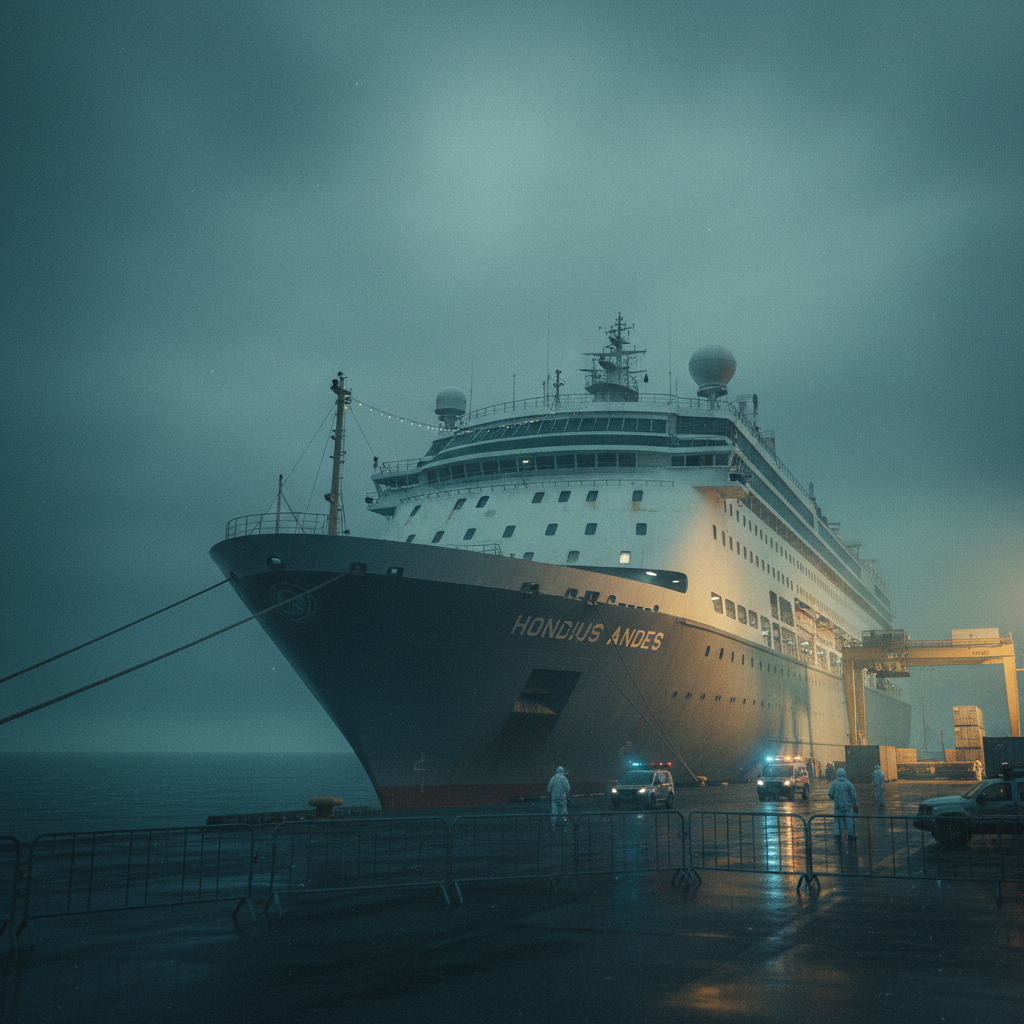
PRAIA, Cape Verde (September 7, 2026) – The ongoing situation aboard the MV Hondius Andes, anchored off Praia since May 2026 following a hantavirus outbreak, has brought into sharp focus the complexities and potential shortcomings of international maritime health regulations. The International Maritime Organization (IMO), along with other global health bodies, is reportedly evaluating existing frameworks with an eye towards strengthening future response capabilities and preventative measures. The MV Hondius Andes, a cruise vessel, reported a cluster of hantavirus cases among passengers and crew. While specific figures remain unconfirmed by independent sources, the prolonged quarantine and subsequent logistical challenges have exposed gaps in preparedness and inter-agency coordination, particularly concerning vessels operating in international waters.
Flag State and Port State Control Under Scrutiny
Central to the discussion are the roles and responsibilities of flag states and port states. The vessel's flag state, responsible for implementing and enforcing international maritime conventions, bears primary oversight for the health and safety of those onboard. Yet, the multi-jurisdictional nature of international voyages means that a vessel often interacts with numerous port states, each with its own public health laws and quarantine procedures. Experts suggest that the Hondius Andes incident highlights potential ambiguities in the enforcement of health regulations across different jurisdictions. "The challenge lies in harmonizing strong health protocols with the practicalities of international shipping," an official familiar with maritime law stated, speaking on background."When a vessel carries an infectious disease, the clear lines of authority between the flag state, the port state where the outbreak is discovered. Potential subsequent ports of call can become blurred."
Port-state controls, typically focused on safety and environmental protection, are now being viewed through a public health lens. There's a growing consensus that port states require clearer, internationally recognized guidelines for assessing infectious disease risks on arriving vessels and for implementing necessary quarantine or medical evacuation procedures without undue delay or jurisdictional disputes. The absence of a unified, immediate-response framework was evident in the initial days following the Hondius Andes' distress call, leading to extended periods of uncertainty for those onboard and the local authorities in Praia.
Strengthening Quarantine Protocols at Sea
The incident has too underscored the need for enhanced quarantine protocols at sea and better mechanisms for medical isolation. While cruise ships typically have infirmaries and medical staff, the scale and nature of an outbreak like hantavirus – which requires specific diagnostics and potentially prolonged critical care – can quickly overwhelm onboard facilities. The ability to effectively isolate suspected cases, manage contacts, and prevent further transmission during a voyage, particularly before reaching a suitable port, is crucial. International health regulations (IHR) provide a framework for global health security, including measures for port health. But, their application in a dynamic maritime environment, especially for novel or geographically unusual pathogens, presents unique challenges. The IMO, in collaboration with the World Health Organization (WHO), is reportedly exploring how to integrate IHR more into existing maritime safety and environmental protection conventions. Discussions are expected to revolve around mandatory onboard public health training for crew, clearer guidelines for medical supplies and isolation facilities. Standardized communication protocols between vessels, flag states, and port state authorities during health emergencies. The aim is to create a more resilient and coordinated global response system to mitigate the impact of future outbreaks on international shipping. The long-term implications for the maritime industry could include more rigorous health inspections, increased financial burdens for compliance. Potentially revised insurance policies covering infectious disease outbreaks at sea. The MV Hondius Andes, while an isolated incident, serves as a stark reminder of the interconnectedness of global health and international commerce.