Hondius Andes Outbreak Sparks Urgent Review of Global Maritime Health Protocols
The ongoing hantavirus incident aboard the MV Hondius Andes off Praia, Cape Verde, is prompting international maritime bodies and national authorities to reassess flag state responsibilities, port state controls, and shipboard quarantine measures amid calls for stronger global health security at sea.
International Scrutiny on Maritime Health Regulations
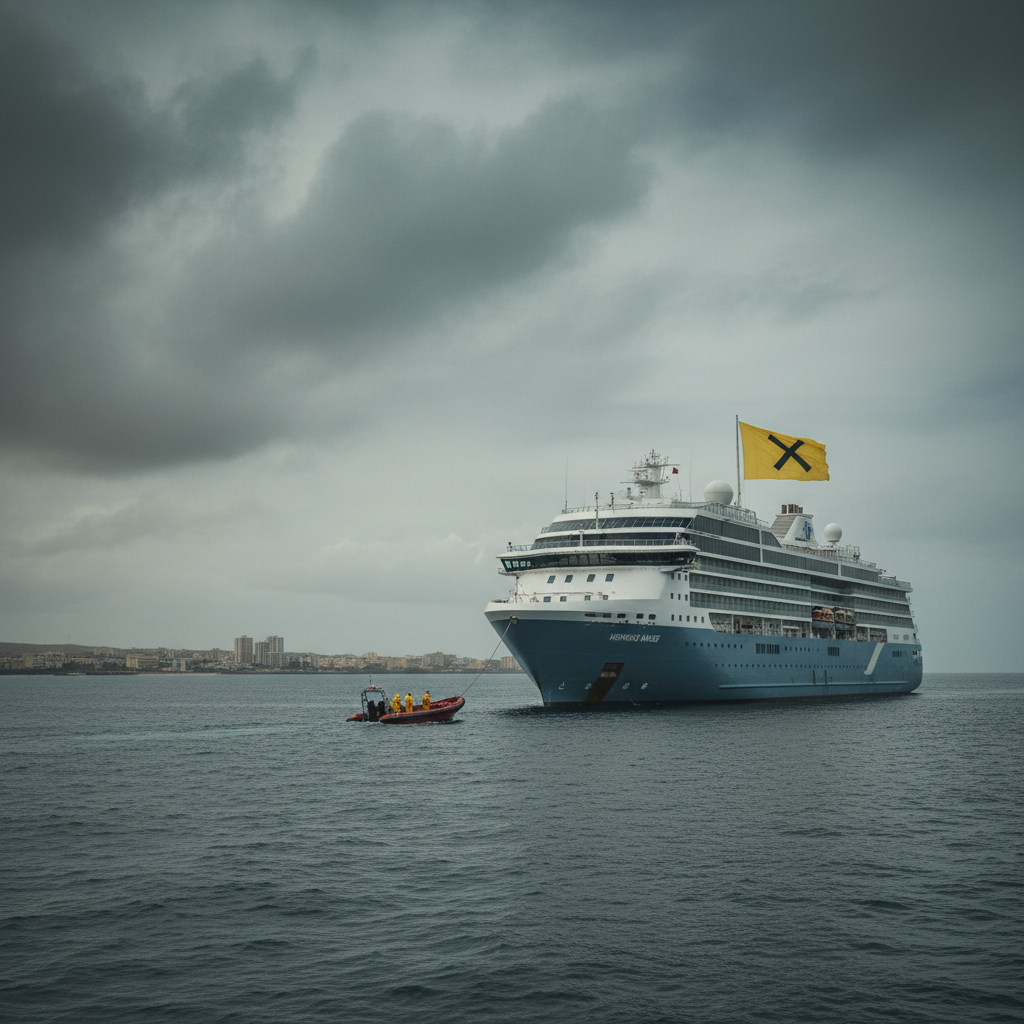
The prolonged health crisis aboard the MV Hondius Andes, currently anchored near Praia, Cape Verde, has brought into sharp focus the complexities and potential vulnerabilities within existing international maritime health regulations.The hantavirus outbreak, first identified in May 2026, has escalated discussions among the International Maritime Organization (IMO), national flag states. Port authorities on the adequacy of current frameworks for managing infectious disease events at sea. The incident underscores critical questions around the division of responsibilities when an outbreak occurs on an internationally flagged vessel operating far from its home port. While the IMO sets broad conventions and guidelines for ship safety and pollution prevention, the day-to-day enforcement of health and safety standards largely rests with the vessel's flag state – the country under whose laws the ship is registered. For the MV Hondius Andes, its flag state holds primary responsibility for ensuring compliance with international health regulations and providing support during a public health emergency.
Flag State Responsibilities and Oversight
Experts note that flag states are obligated under international law, particularly the International Health Regulations (IHR) 2005, to ensure vessels flying their flag can implement public health measures. This includes maintaining sanitation, having qualified medical personnel on board, and enacting effective disease surveillance and response protocols. The challenge, as highlighted by the Hondius Andes situation, lies in the practical enforcement and oversight when a vessel is operating globally. During an outbreak, the flag state is expected to coordinate with affected port states and international bodies. Yet, resources and expertise can vary bigly between different flag states, potentially leading to disparities in emergency response capabilities. The protracted nature of the Hondius Andes situation has led some maritime policy analysts to suggest that the current system may require more strong mechanisms for international assistance and oversight to ensure a consistent standard of care and containment, regardless of the flag a ship flies.
Port State Control: A Critical Junction
Port State Control (PSC) inspections are another layer of maritime regulation designed to ensure that foreign-flagged vessels calling at a port comply with international conventions. These inspections, conducted by the authorities of the port state, can include checks related to crew welfare, safety equipment, and, increasingly, public health provisions. The Hondius Andes incident has amplified calls for PSC regimes to more rigorously inspect and enforce health-related requirements, especially in the context of emerging infectious diseases. When a vessel with a known or suspected outbreak approaches a port, the port state has the authority and responsibility to implement public health measures, which can include denying entry, ordering quarantine, or facilitating medical evacuation. The decision-making process involves balancing public health imperatives with humanitarian concerns and the economic impact of diverting or delaying a vessel. One detail: the experience of the Hondius Andes, anchored offshore for an extended period, illustrates the complex negotiations and logistical challenges inherent in such situations, involving multiple national and international stakeholders.
Shipboard Quarantine and Public Health Emergencies
The implementation of effective quarantine protocols at sea is paramount during an infectious disease outbreak. International Health Regulations (IHR) 2005 provide a framework for responding to public health events of international concern, including specific provisions for conveyances like ships. These regulations empower states to take necessary measures to prevent the international spread of disease, while respecting the rights of travelers. For the MV Hondius Andes, establishing and maintaining effective quarantine measures within a confined environment has been a central challenge. This involves isolating ill individuals, monitoring contacts, implementing strict hygiene practices, and managing waste. The psychological impact on passengers and crew during extended quarantine periods as well necessitates attention, requiring mental health support alongside medical care.The ongoing situation aboard the Hondius Andes is expected to inform future IMO and WHO guidelines on managing prolonged public health crises on cruise vessels, particularly concerning the logistics of resupply, medical personnel rotation. Repatriation under quarantine conditions. Maritime industry bodies and health organizations are now actively engaged in discussions to identify lessons learned from the Hondius Andes event.These discussions are anticipated to lead to updated guidance for ship operators, enhanced training for crew members. Potentially new international agreements aimed at strengthening global health security within the maritime sector. The goal is to create a more resilient system capable of rapid, coordinated, and effective responses to future infectious disease threats at sea.



