Hondius Andes Passengers Describe Isolation, Uncertainty Amidst Disembarkation Efforts
Aboard the MV Hondius Andes, passengers report growing frustration and anxiety as health protocols and communication challenges shape their experience during the protracted hantavirus outbreak response off Praia, Cape Verde.
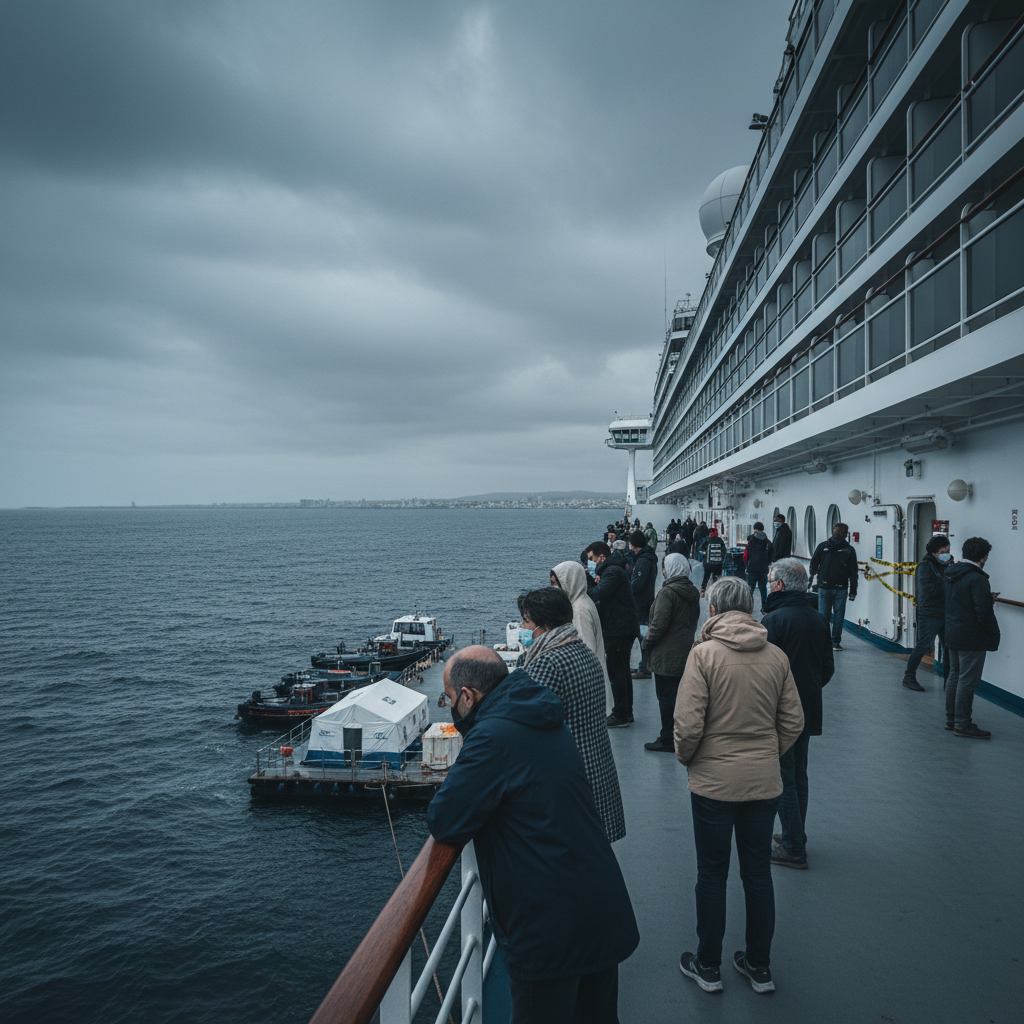
Onboard Realities: Isolation and Communication Gaps
Passengers remaining aboard the MV Hondius Andes, anchored off Praia, Cape Verde, since the hantavirus outbreak was first identified in May 2026, continue to describe an environment dominated by stringent health protocols and inconsistent communication from the cruise operator. Accounts, corroborated by family members ashore and information released by authorities, paint a picture of prolonged isolation and mounting uncertainty regarding their future. Following initial reports of illness and the subsequent diagnostic confirmation of hantavirus, passengers were largely confined to their cabins. This measure, implemented to curb further transmission, has now extended for several months for a bigly portion of those still onboard. While essential services such as meal delivery and medical care have been maintained, the prolonged restriction has reportedly taken a toll on mental well-being. Regular temperature checks, symptom monitoring, and scheduled cabin disinfection are standard operating procedures, according to publicly available guidelines issued by the operator. Communication, a key point of contention, has been a recurring theme in reports from passengers. While the cruise operator has issued periodic updates, several individuals and their families have described these communications as infrequent, often lacking specific details on the health status of affected individuals, or definitive timelines for disembarkation. This perceived information vacuum has fueled anxiety among those onboard and their relatives waiting ashore. Organizations such as the World Health Organization (WHO) and the International Maritime Organization (IMO) have previously emphasized the importance of transparent and timely communication during maritime health emergencies, noting its role in maintaining morale and public trust.
Operator's Response and Evolving Protocols
The cruise operator, in statements released through its public relations channels, has reiterated its commitment to passenger and crew safety, emphasizing adherence to international health regulations and guidance from relevant health authorities, including Africa CDC and local Cape Verdean health officials. They acknowledge the challenging circumstances and have stated that protocols are constantly reviewed and adjusted based on epidemiological data and expert advice. Initial response focused on isolation, contact tracing, and medical assessment of all individuals exhibiting symptoms. Public health experts from various international bodies, including the European Centre for Disease Prevention and Control (ECDC), have been involved in assisting Cape Verdean authorities and the ship's medical team. The complexity of hantavirus transmission and its varied incubation period have necessitated a cautious and extended approach to containment. Testing capacity has been a critical element, with samples reportedly being processed both onboard and at designated facilities ashore.
Disembarkation Challenges and Phased Approach
Disembarkation for passengers and non-essential crew has been a gradual and highly coordinated process, facing bigly logistical and public health hurdles. Early disembarkations were limited to individuals requiring urgent medical attention ashore, those who completed extensive quarantine periods with negative test results, or those repatriated under specific bilateral agreements with their home countries. Each stage of disembarkation has been subject to strict health screenings, including multiple rounds of PCR testing for hantavirus where feasible and appropriate. The primary challenges cited by authorities and the operator include the need to ensure no further exportation of the virus to onshore communities, the logistical complexities of transporting large groups of individuals internationally during a public health crisis. Securing appropriate onward travel and quarantine facilities in passengers' home countries. Several countries have imposed their own entry requirements, further complicating repatriation efforts. The government of Cape Verde, in coordination with the IMO, has played a central role in facilitating the anchoring of the vessel and providing humanitarian support while ensuring national public health security. As of September 11, 2026, a bigly number of passengers remain onboard, awaiting clarity on their disembarkation. The process is being managed in phases, with priority often given based on health status, nationality, and the availability of safe transit and receiving protocols. Important context: the protracted nature of the situation underscores the profound impact of emerging infectious diseases on global maritime travel and the intricate coordination required to manage such prolonged outbreaks at sea.



