Hondius Andes Passengers Detail Isolation, Communication Gaps Amid Outbreak
MV Hondius Andes passengers describe extended isolation protocols, inconsistent information, and evolving disembarkation plans as the vessel remains anchored off Praia, Cape Verde, since the May 2026 hantavirus alert.
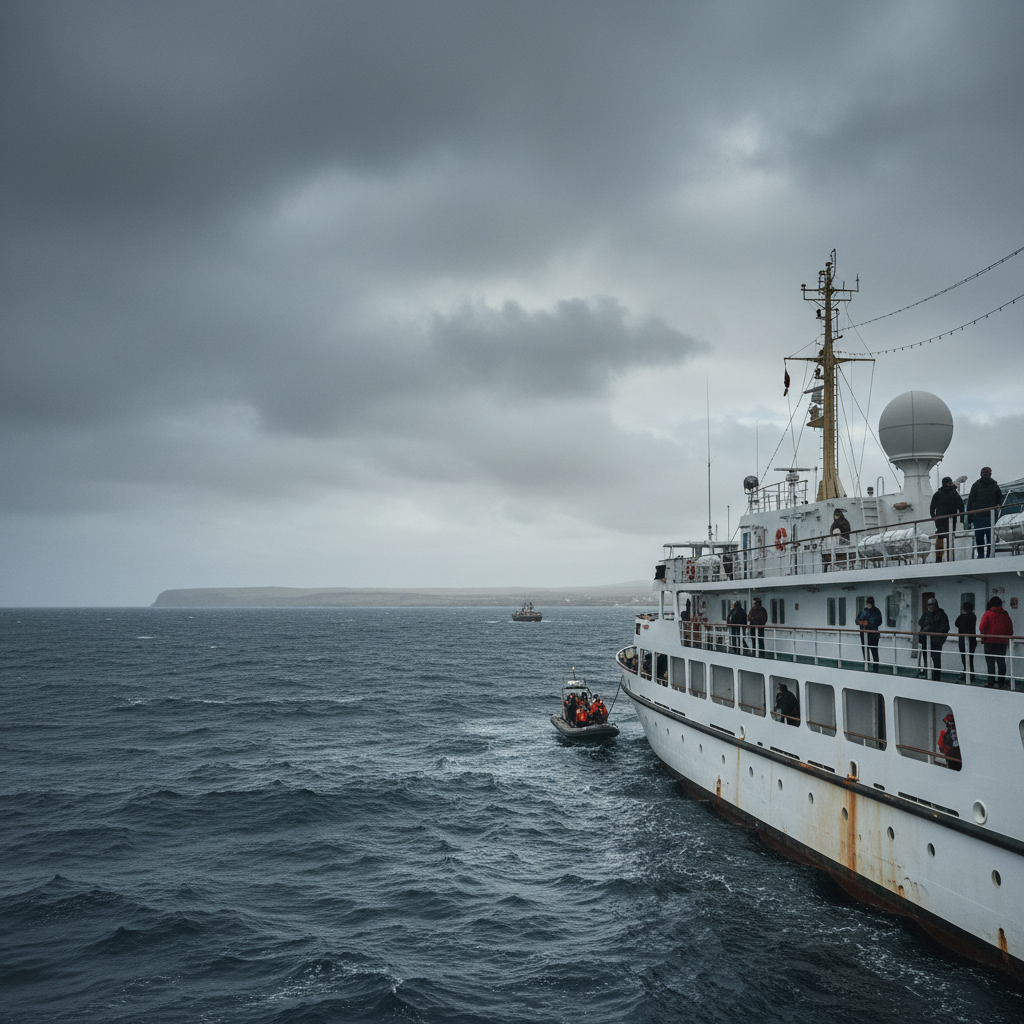
Hondius Andes: Passenger Accounts Emerge from Prolonged Quarantine
Passengers aboard the MV Hondius Andes, anchored off Praia, Cape Verde, since May 2026, have begun to share their experiences regarding onboard conditions, communication from the operator. The logistical challenges of a prolonged quarantine amidst a hantavirus outbreak.
Life Under Quarantine: Isolation and Health Monitoring
Verified accounts from individuals onboard, primarily communicated through secure satellite connections and relayed by family members ashore, paint a picture of varying levels of isolation and health monitoring. Initially, a broad containment strategy was implemented, limiting passenger movement to individual cabins. More recently, this has evolved for some passengers, depending on health status and proximity to confirmed cases, allowing for supervised, staggered access to limited outdoor areas or designated common spaces.Air circulation within the vessel's HVAC systems has been a recurrent concern among passengers. The cruise operator has stated publicly that air quality protocols are under constant review and adjustment in consultation with international health authorities. Health checks are reportedly frequent, involving temperature screenings and symptom questionnaires. Passengers who develop symptoms are promptly moved to isolation cabins or a dedicated medical facility onboard. The psychological toll of prolonged confinement, coupled with uncertainty, is a recurring theme in passenger communications. Access to mental health support has been made available remotely for some, and through onboard medical staff for others.
Operator Communications: A Shifting Landscape
Communications from the cruise operator, Andes Expeditions, to passengers have been a source of contention. Early in the outbreak, passengers reported infrequent and sometimes vague updates. As the situation has progressed, communications have become more regular, often detailing daily health protocols, meal service adjustments, and efforts towards disembarkation. But, passenger feedback consistently highlights a desire for greater transparency on the overall timeline, the specific nature of ongoing health investigations, and clearer criteria for disembarkation. Andes Expeditions has maintained that its primary focus is the health and safety of all onboard. That communication strategies are dynamic, adapting to the evolving medical and logistical complexities. Updates are typically distributed via the ship's internal broadcast system, printed notices, and through direct communication with cabin stewards or medical personnel. The operator has also established dedicated helplines for families ashore, though reports indicate varying levels of satisfaction with the responsiveness and information provided through these channels.
Disembarkation Logistics: A Complex International Effort
The disembarkation of MV Hondius Andes passengers and crew presents a bigly logistical and epidemiological challenge. As of August 2026, no mass disembarkation has occurred, largely due to ongoing health screening requirements and the complex negotiations involving multiple international health bodies and national governments. The World Health Organization (WHO), in coordination with the Africa Centres for Disease Control and Prevention (Africa CDC) and the European Centre for Disease Prevention and Control (ECDC), has been instrumental in developing protocols for safe disembarkation that minimize the risk of further hantavirus transmission. Preliminary plans, as reported by authorities involved in the response, indicate that disembarkation will be highly staggered and contingent upon individuals clearing multiple rounds of hantavirus testing. Passengers would then be subject to further quarantine periods upon arrival in their home countries, under the supervision of their respective national health authorities. Repatriation flights would need to be specially chartered and equipped for safe transport, with stringent biosafety measures in place. The International Maritime Organization (IMO) has as well been involved in discussions, focusing on the welfare of the crew and the maritime legal aspects of such a prolonged anchorage. National governments of affected passengers' home countries have been engaged in discussions with Cape Verdean authorities regarding transit and repatriation. The complexity is magnified by the varied nationalities onboard, each with distinct public health regulations and capacities for receiving and monitoring repatriated citizens. Important context: the unconfirmed timeframe for a full disembarkation remains a primary source of anxiety for those onboard and their families.
Looking Forward
As the MV Hondius Andes remains anchored, the global public health community, alongside maritime and government agencies, continues to work towards a resolution that prioritizes public health safety while addressing the humanitarian concerns of those onboard. Passenger accounts continue to serve as a vital, if fragmented, record of the human experience at the heart of this unprecedented maritime health crisis.



