Hondius Andes Passengers Detail Onboard Ordeal, Disembarkation Logistics Under Scrutiny
Accounts from MV Hondius Andes passengers highlight challenging conditions during quarantine, communication breakdowns, and complex disembarkation protocols as global health agencies coordinate response efforts.
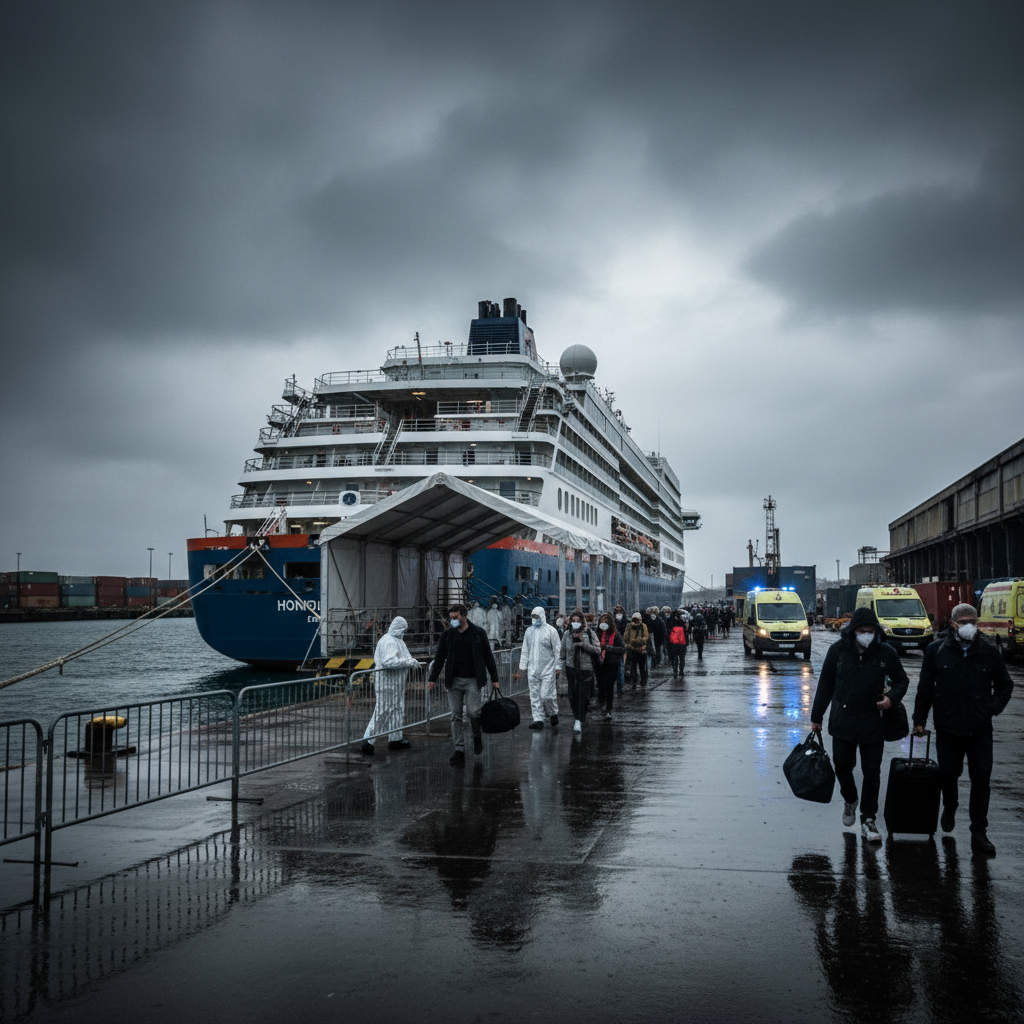
Passenger Accounts Shed Light on Onboard Conditions
PRAIA, CAPE VERDE – Passengers aboard the MV Hondius Andes, quarantined off the coast of Praia, Cape Verde, have begun to share their experiences, painting a picture of evolving challenges during the extended isolation period. Publicly accessible accounts from individuals on the vessel, primarily shared through limited satellite communication channels, describe a mix of apprehension and frustration, particularly concerning access to information and basic amenities. Initial reports from passengers, consistent across multiple platforms, indicate a gradual deterioration in morale as the quarantine extended beyond initial projections. Concerns were frequently raised on the adequacy of medical care for non-hantavirus-related conditions, mental health support, and the provision of fresh supplies. While the vessel operator, Polar Expeditions Inc., stated it was providing comprehensive care, passengers often expressed a desire for more transparent and frequent updates from medical and operational teams on board. “The uncertainty was perhaps the hardest part,” one passenger's relative communicated, echoing sentiments about the lack of clarity on the timeline for testing and eventual release. These narratives underscore the psychological toll of prolonged isolation in a confined environment, compounded by the presence of a serious infectious disease.
Operator Communications and Information Dissemination
Polar Expeditions Inc. Has faced increasing pressure to enhance its communication strategy with those onboard and their families. Early in the outbreak response, passengers reported sporadic and often vague announcements. Subsequent adjustments by the operator, likely in response to feedback and guidance from international health authorities, saw an increase in the frequency of general health updates and information on the testing process. Yet, the challenge of delivering personalized medical information and addressing individual passenger queries remained bigly, given the large number of individuals on board and the limited communication infrastructure. The company has publicly stated its commitment to passenger welfare and transparent communication, attributing initial difficulties to the rapidly evolving nature of the emergency and technical constraints. International health organizations, including the World Health Organization (WHO) and the European Centre for Disease Prevention and Control (ECDC), have stressed the importance of clear, consistent. Empathetic communication during health emergencies. Guidance from these bodies typically advises operators to establish dedicated communication channels, provide multilingual support, and ensure information is accessible to all passengers, including those with disabilities.
Complexities of Disembarkation Logistics
The disembarkation process for the MV Hondius Andes has proven to be an intricate logistical challenge, requiring coordination between multiple national governments, international health bodies, and the vessel operator. As of [2026-09-15], disembarkation is proceeding in phases, prioritizing individuals who have completed mandated quarantine periods, tested negative for hantavirus, and are asymptomatic. This phased approach is critical to prevent further transmission and manage the flow of individuals into various countries. The primary hurdles include securing air transport for hundreds of passengers from diverse nationalities, arranging onward travel to their home countries. Ensuring continued health monitoring upon arrival. Many nations have imposed strict entry requirements for individuals returning from the Hondius Andes, including additional screening and self-isolation periods. Cape Verdean authorities, in collaboration with the Africa Centres for Disease Control and Prevention (Africa CDC) and the WHO, have established temporary transit facilities on shore to manage the initial processing of passengers. These facilities are designed to minimize contact with the local population and provide a secure environment for health checks before passengers board repatriation flights. For those who tested positive or remain symptomatic, specific medical evacuation protocols are being followed. These protocols involve highly specialized transport and coordinated reception at designated medical facilities in their home countries or other agreed-upon locations, adhering to stringent biosafety measures to protect medical personnel and the public. The International Maritime Organization (IMO) has also been involved, providing guidance on maritime health declarations and port state responsibilities for managing infectious disease outbreaks on vessels. The incident underscores the need for strong international frameworks for managing such events, particularly in regions with limited public health infrastructure. As the disembarkation continues, the focus remains on ensuring the health and safety of all individuals, from passengers and crew to the communities involved in the repatriation effort. The MV Hondius Andes incident is expected to prompt bigly reviews of cruise industry health protocols and international emergency response mechanisms.



