Hondius Andes Passengers Detail Ordeal Amid Disembarkation Logistics
Accounts from MV Hondius Andes passengers paint a picture of isolation and uncertainty as operator communications evolve and complex disembarkation plans unfold for the hantavirus-affected vessel.
Onboard Isolation and Evolving Communications
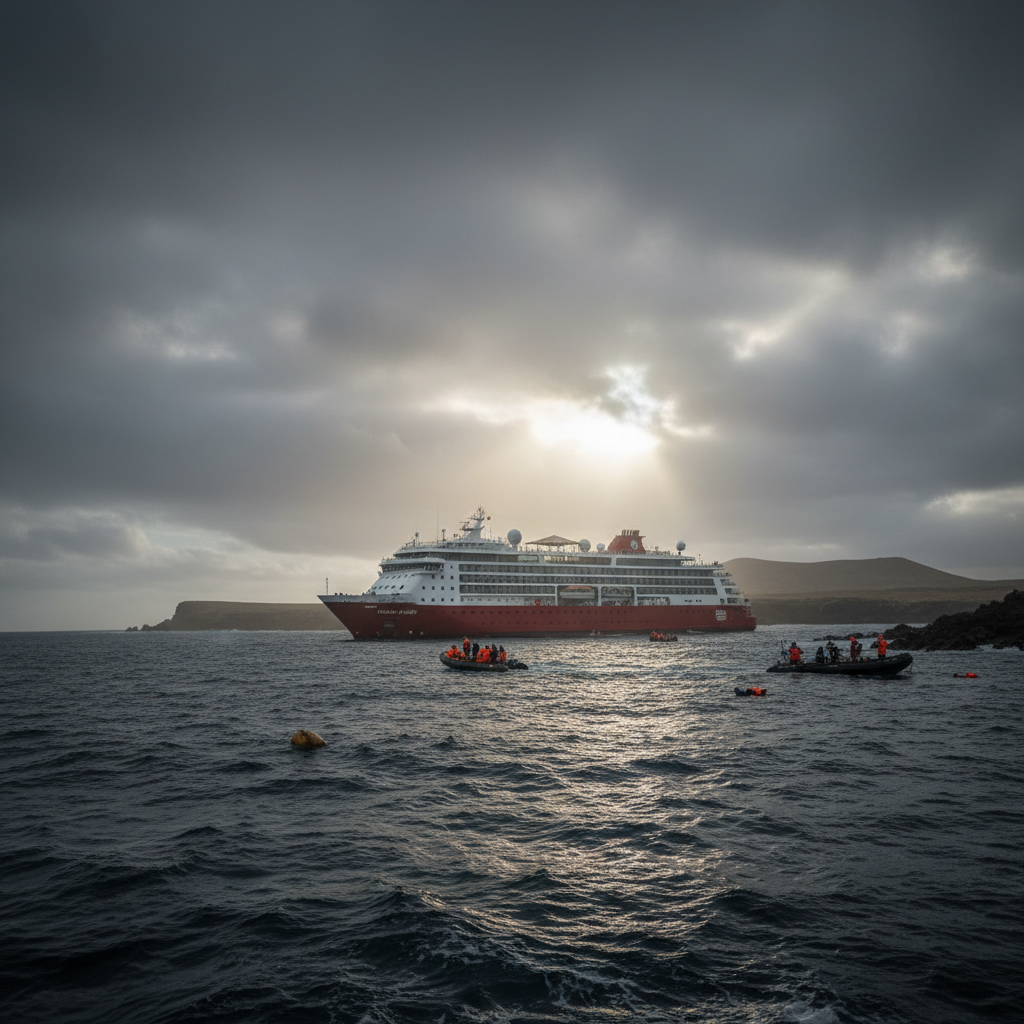
Passengers aboard the MV Hondius Andes, anchored off Praia, Cape Verde, since May 2026, have shared accounts detailing their experiences during the prolonged hantavirus outbreak response. Initial communications from the vessel operator, 'Polar Expeditions,' were described by some as infrequent and lacking specific details on the containment efforts and health protocols. Over time, communication frequency reportedly increased, with daily updates provided through the ship's public address system and printed circulars distributed to cabins. Early reports from passengers via satellite communication indicated widespread adherence to isolation protocols. Multiple passengers described being confined to their cabins, with meals delivered to their doors by masked and gloved crew members. Access to open decks and communal areas was severely restricted, with limited, staggered allowances for brief, supervised outdoor access, primarily for passengers in interior cabins. The primary focus of these restrictions was to prevent further transmission of the hantavirus within the enclosed environment of the cruise ship.
Health Monitoring and Medical Response
Regular health checks, including temperature screenings and symptom questionnaires, became a daily routine for all passengers and crew. Those exhibiting symptoms consistent with hantavirus pulmonary syndrome (HPS) were reportedly isolated in dedicated medical facilities on board or, in more severe cases, transferred to shore-based medical facilities in Praia, Cape Verde, under strict bio-containment protocols. The specific number of such transfers has not been publicly released by authorities as of 2026-10-04, but international health organizations have acknowledged ongoing medical support. According to accounts, the ship's medical team, augmented by international medical personnel deployed by the World Health Organization (WHO) and Africa Centres for Disease Control and Prevention (Africa CDC), worked tirelessly to manage cases and monitor the health status of all individuals on board. Passengers described a feeling of uncertainty on the long-term health implications and the duration of their containment.
Disembarkation Challenges and Planning
The logistics of disembarking hundreds of passengers and crew from a vessel with confirmed hantavirus cases have presented unprecedented challenges.International health authorities, including the WHO and the European Centre for Disease Prevention and Control (ECDC), have been working with the Cape Verdean government, the ship operator. National health agencies of various passenger nationalities to develop a phased and safe disembarkation plan. Key considerations for disembarkation include the prolonged incubation period of hantavirus, the need for comprehensive health screening before travel, and the arrangements for onward international travel. The International Maritime Organization (IMO) has also been involved in coordinating the maritime aspects of the operation, ensuring compliance with international health regulations and safe port entry procedures for auxiliary vessels. As of 2026-10-04, the initial phases of disembarkation have focused on individuals deemed medically cleared and those requiring immediate repatriation for non-hantavirus-related health concerns, following stringent isolation and testing protocols. Passengers from certain countries, particularly those with strong national health screening capabilities, were among the first groups identified for potential repatriation. Each disembarking individual is reportedly undergoing multiple rounds of hantavirus testing and a mandatory observation period in a secure facility onshore before being cleared for international travel. Dedicated charter flights are being organized for repatriation, circumventing commercial airline routes to minimize public health risks.
Support and Repatriation Efforts
Embassies and consular services of affected nations have established communication channels with their citizens on board, providing updates and coordinating repatriation efforts. Mental health support services have also been made available to passengers, acknowledging the bigly psychological toll of prolonged isolation and uncertainty. The Hondius Andes operator has stated its commitment to ensuring the safe and healthy repatriation of all individuals, reiterating its cooperation with global health bodies. The ongoing disembarkation process highlights the complex interplay of public health, international diplomacy, and maritime logistics in managing a prolonged infectious disease outbreak on a cruise vessel. Authorities continue to emphasize the priority of public health safety both onboard and in destination countries.
Sources
- World Health Organization. (WHO). https://www.who.int
- Africa Centres for Disease Control and Prevention. (Africa CDC). https://africacdc.org
- European Centre for Disease Prevention and Control. (ECDC). https://www.ecdc.europa.eu
- International Maritime Organization. (IMO). https://www.imo.org
- Reuters. https://www.reuters.com
- The Associated Press. (AP). https://apnews.com
- British Broadcasting Corporation. (BBC). https://www.bbc.com



