Hondius Andes Passengers Detail Prolonged Onboard Stay, Uncertain Disembarkation
Months after the hantavirus outbreak began, passengers on the MV Hondius Andes describe living under strict isolation protocols with limited information, as operator Polar Expeditions outlines complex disembarkation plans contingent on health clearances and international coordination.
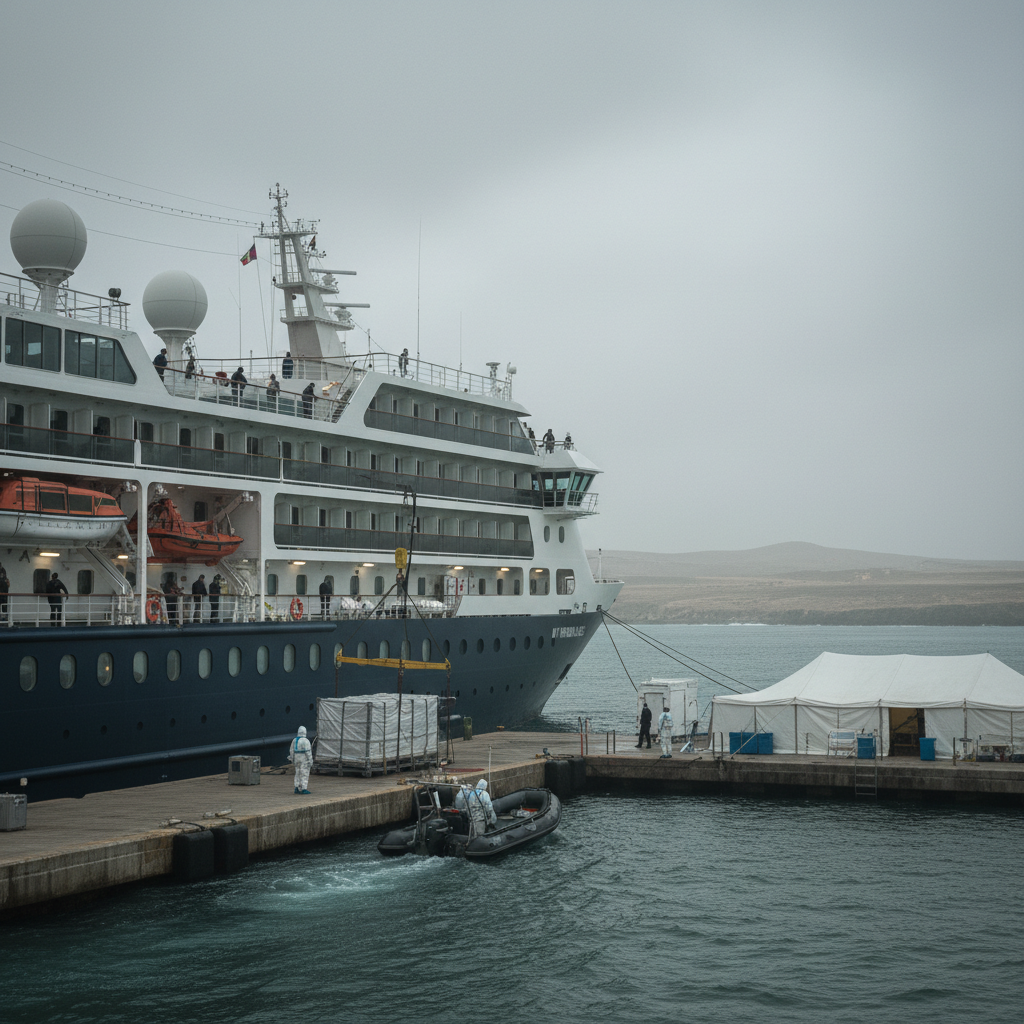
Passenger Accounts Detail Life Under Quarantine
PRAIA, Cape Verde – Passengers aboard the MV Hondius Andes, anchored off Praia since May 2026, continue to navigate life under an extended quarantine, with many expressing a mix of resignation and frustration regarding their prolonged confinement. Verified communications from the vessel, relayed through family members and diplomatic channels, describe a challenging environment marked by stringent health protocols and evolving logistical uncertainties. Initial days following the identification of the hantavirus outbreak were characterized by confusion and rapid implementation of isolation measures. As reported by multiple sources, passengers were quickly confined to cabins, with meals delivered and essential services adapted to minimize contact. This strict regimen has largely remained in place, albeit with some adjustments for monitored outdoor access in designated zones, as detailed in communications from Polar Expeditions, the ship's operator. “The initial shock has given way to a kind of routine, albeit a highly restricted one,” one communication stated, reflecting a common sentiment among those onboard. Access to medical services, mental health support, and communication with the outside world has been a consistent focus for both passengers and the operator. Polar Expeditions has publicly affirmed its commitment to providing comprehensive medical care onboard, in collaboration with international health organizations, including the World Health Organization (WHO) and the US Centers for Disease Control and Prevention (US CDC). Though, the psychological toll of sustained isolation is a recurring theme in passenger accounts. The uncertainty surrounding disembarkation, coupled with the health risks associated with the outbreak, has contributed to widespread stress. Support groups for families of those onboard have emerged online, serving as a hub for information sharing and emotional support, often highlighting the need for clearer, more frequent updates from authorities and the cruise line.
Operator Communications and Evolving Logistics
Polar Expeditions has maintained a communication strategy focused on regular, if sometimes delayed, updates to passengers and their families. These updates have primarily addressed the evolving health situation onboard, the ongoing medical surveillance, and the complex process of planning for disembarkation. The company has repeatedly emphasized its reliance on guidance from international public health bodies and national authorities in Cape Verde and countries of passenger origin. Early communications from Polar Expeditions in May and June focused on containing the outbreak and stabilizing the health of affected individuals. Subsequent updates have increasingly centered on the hurdles to disembarkation.Key challenges identified by the operator include the need for multiple negative hantavirus tests for each passenger, securing entry permissions from various national governments. Arranging safe, isolated transport pathways to prevent further viral transmission. As of early October 2026, Polar Expeditions has confirmed that disembarkation will proceed in phases, prioritizing individuals deemed medically fit and who have secured entry approval from their home countries. The company indicated that a bigly portion of the remaining passengers are undergoing final health screenings as per international protocols. One detail: the logistical undertaking is immense, involving chartered flights, dedicated ground transport, and coordination with health agencies across several continents.
Disembarkation Pathways and International Coordination
Disembarkation logistics are being coordinated through a complex web of international agreements and health protocols.The International Maritime Organization (IMO) has been instrumental in facilitating discussions between flag states, port states. Various health agencies to ensure a harmonized approach to crew and passenger repatriation during global health crises. The current situation with the Hondius Andes represents an unprecedented case study in prolonged maritime quarantine and large-scale, bio-secure repatriation. The government of Cape Verde, as the host nation for the anchored vessel, has played a crucial role in overseeing the humanitarian and public health aspects of the situation. While allowing the ship to remain anchored in its waters, Cape Verdean authorities have emphasized the need for strict adherence to international health regulations to safeguard their own population. For passengers, the path home involves rigorous testing, health declarations, and in several cases, a requirement for further quarantine upon arrival in their home countries. The US CDC and the European Centre for Disease Prevention and Control (ECDC) have issued guidance on managing repatriated individuals from outbreak zones, which is being adapted for the unique hantavirus context. Unconfirmed reports suggest that a pilot disembarkation for a small group of passengers may occur in the coming weeks, serving as a test case for the larger operation. Families anxiously await concrete timelines, acknowledging the complexity but urging transparency and efficiency. The ongoing situation with the MV Hondius Andes underscores the challenges of managing infectious disease outbreaks in a globalized maritime environment and highlights the critical need for strong international public health frameworks.



