IMO Regulations Under Scrutiny Following Hondius Andes Hantavirus Outbreak
The ongoing hantavirus incident aboard the MV Hondius Andes off Praia, Cape Verde, is sparking renewed debate over the adequacy of international maritime health regulations, flag-state oversight, and port-state controls in managing infectious disease outbreaks at sea.
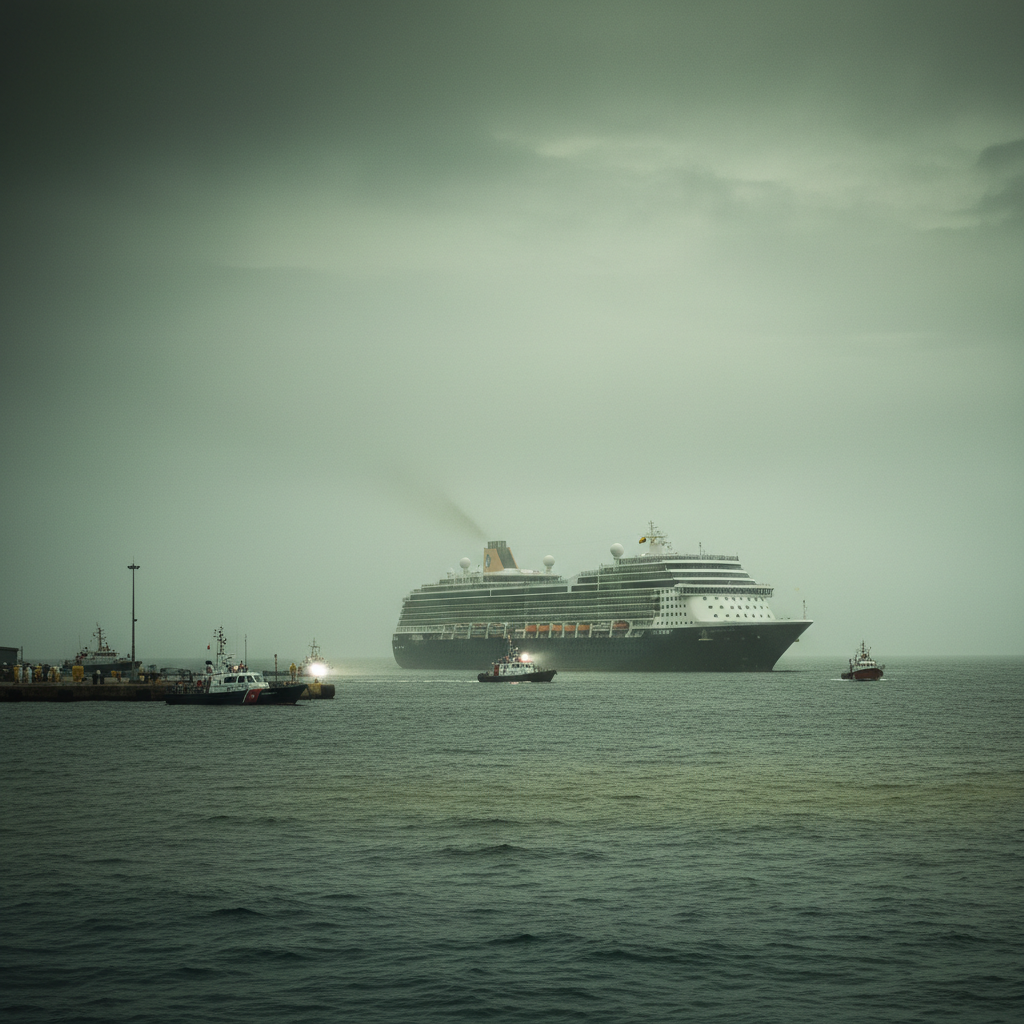
International Scrutiny on Maritime Health Protocols
The prolonged quarantine of the MV Hondius Andes, anchored near Praia, Cape Verde, since May 2026, has brought the intricate web of international maritime health regulations, flag-state responsibilities. Port-state controls into sharp focus. The hantavirus outbreak aboard the vessel has exposed potential gaps in global preparedness and response mechanisms for infectious diseases on passenger ships.
The Role of the International Maritime Organization (IMO)
The International Maritime Organization (IMO), a specialized agency of the United Nations, is primarily responsible for the safety and security of shipping and the prevention of marine and atmospheric pollution by ships. While the IMO develops a comprehensive regulatory framework, including aspects related to crew health and passenger safety, direct public health mandates often intersect with guidelines from the World Health Organization (WHO). IMO instruments such as the International Safety Management (ISM) Code implicitly require strong safety management systems that encompass emergency preparedness, including health crises. Though, the current incident has led some maritime health experts to question whether existing IMO frameworks provide sufficient granular detail or enforcement mechanisms specifically tailored to emerging infectious disease threats on passenger vessels, particularly those with complex epidemiological profiles like hantavirus, which is not typically person-to-person transmissible yet zoonotic in origin.
Flag State Obligations and Enforcement
The MV Hondius Andes operates under a specific flag state, which holds primary responsibility for implementing and enforcing international maritime conventions. This includes ensuring the vessel adheres to safety, security, and environmental protection standards, as well as maintaining crew health and welfare. The flag state is expected to conduct regular inspections and audits to verify compliance.In the context of an outbreak, the flag state is often the first point of contact and authority for managing the vessel's response. Practical on-site management often falls to local port authorities and health organizations. Critics suggest that the effectiveness of flag-state control can vary bigly depending on the resources and commitment of individual nations. Concerns have been raised on the potential for 'flags of convenience' to sometimes lead to less stringent oversight compared to countries with more strong maritime administrations. The Hondius Andes situation highlights the critical need for prompt and effective flag-state intervention in coordinating with international health bodies and port authorities to contain and manage health crises.
Port State Control: A Critical Junction
Port State Control (PSC) refers to the inspection of foreign ships in national ports by PSC officers (PSCOs) to verify that the condition of the ship and its equipment comply with the requirements of international conventions.While PSC inspections typically focus on structural integrity, safety equipment. Pollution prevention, they also have the authority to address issues impacting crew and passenger health, especially if conditions pose an imminent risk. For instance, if sanitation or hygiene standards are visibly inadequate, a PSCO could detain a vessel. Though, the detection and management of a novel infectious disease like hantavirus, particularly one with an incubation period and non-traditional transmission routes, presents unique challenges for routine PSC inspections.The incident off Praia underscores the necessity for enhanced collaboration between port authorities, national public health bodies. International organizations like the WHO to develop clear protocols for infectious disease screening, isolation, and disembarkation procedures for vessels arriving with suspected outbreaks. The decision to permit or deny entry, and the conditions under which it occurs, directly impacts public health and humanitarian considerations.
Quarantine Protocols at Sea and International Health Regulations
The International Health Regulations (IHR) 2005, administered by the WHO, provide a legal framework for global public health security. They outline countries' rights and obligations regarding public health events that have the potential to cross borders. The IHR include specific provisions for conveyances (ships, aircraft, etc.) and ports, requiring states to have capacities for surveillance, detection, reporting, and response to public health emergencies. Quarantine, as implemented for the MV Hondius Andes, is a measure permitted under the IHR when deemed necessary to prevent the international spread of disease. The prolonged nature of the Hondius Andes quarantine. The logistical challenges associated with maintaining a shipboard population's health and well-being, raise questions around the practical application of IHR in such protracted maritime scenarios. While isolation and quarantine are established public health tools, the complexity of managing a large number of potentially exposed individuals in a confined environment, coupled with the need for ongoing medical care and supplies, highlights the need for well-defined international support mechanisms and shared best practices for extended shipboard quarantines. The ongoing situation continues to serve as a stark reminder of the interconnectedness of global health and maritime operations, urging a comprehensive review of existing regulations and the collaborative frameworks designed to protect public health on the high seas.



