International Health Agencies Bolster Response to MV Hondius Andes Hantavirus Outbreak
Global health bodies, including WHO, ECDC, Africa CDC, and US CDC, have intensified coordination and deployed resources to manage the Hantavirus outbreak aboard the MV Hondius Andes, anchored off Praia, Cape Verde, focusing on containment and public health advisories.
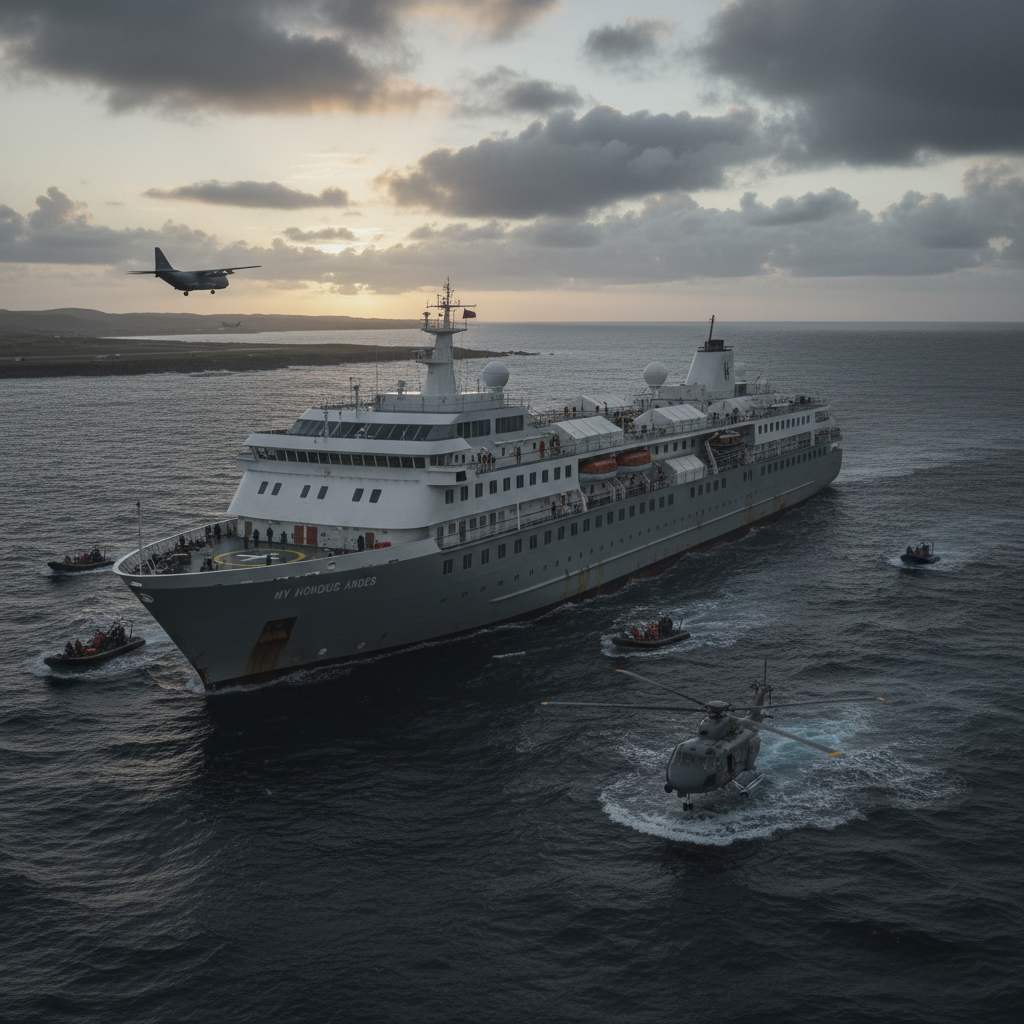
Coordinated Global Effort Addresses MV Hondius Andes Crisis
Praia, Cape Verde – August 24, 2026 – International public health organizations are engaged in a bigly coordinated effort to mitigate the Hantavirus outbreak affecting the MV Hondius Andes cruise ship, presently anchored off the coast of Praia, Cape Verde. The World Health Organization (WHO), the European Centre for Disease Prevention and Control (ECDC), the Africa Centres for Disease Control and Prevention (Africa CDC), and the U.S.Centers for Disease Control and Prevention (US CDC) have been central to the response, providing guidance, technical support. Critical resources since the outbreak was first identified in May 2026.
WHO Leads Global Strategy and Information Sharing
The World Health Organization has taken a leading role in convening international partners and coordinating the global health response.A spokesperson for WHO confirmed that the organization has been working closely with Cape Verdean health authorities, other affected nations. The ship's operator to establish and implement strong health protocols. WHO's primary focus includes standardizing case definitions, laboratory diagnostics, and infection prevention and control measures. The agency has also been instrumental in facilitating the sharing of epidemiological data among involved countries and ensuring that public health advisories are consistent and evidence-based. These advisories emphasize the zoonotic nature of Hantavirus and the importance of stringent environmental hygiene on board the vessel to prevent further transmission.
ECDC Focuses on European Traveler Health and Risk Assessment
The European Centre for Disease Prevention and Control has concentrated its efforts on safeguarding European citizens impacted by the outbreak and assessing the risk of wider transmission within the European Union. ECDC has issued detailed risk assessments and guidance for EU Member States regarding surveillance, contact tracing, and management of returning travelers from the MV Hondius Andes. The agency has highlighted the importance of early detection among potentially exposed individuals and has been actively sharing its expertise in outbreak investigation and data analysis. ECDC’s participation underscores the global interconnectedness of such maritime health crises, especially given the diverse nationalities of passengers and crew typically found on cruise vessels.
Africa CDC Supports Regional Preparedness and Response
The Africa Centres for Disease Control and Prevention has been critical in supporting Cape Verde and other African nations potentially affected by the outbreak. Given the vessel's proximity to the African continent, Africa CDC has provided technical assistance in surveillance, laboratory capacity building, and emergency response planning. The organization has also been crucial in disseminating information and best practices across its member states, ensuring that regional health systems are prepared to identify and manage potential cases, should they arise onshore. Africa CDC emphasizes a continental approach to health security, viewing the MV Hondius Andes situation as a critical test of regional preparedness against emerging infectious diseases.
US CDC Provides Expertise and Laboratory Support
The U.S. Centers for Disease Control and Prevention has deployed specialized teams and offered bigly laboratory support to aid in the identification and characterization of the Hantavirus strain. US CDC experts have provided consultation on epidemiological investigation techniques, enhanced surveillance strategies, and clinical management protocols for Hantavirus pulmonary syndrome (HPS). The agency has as well been instrumental in developing and refining diagnostic tests, crucial for accurate and timely case confirmation. The US CDC's involvement highlights the extensive reach of its public health expertise, particularly in novel or complex outbreaks.
Ongoing Coordination and Future Outlook
The four agencies, alongside national health authorities and the International Maritime Organization (IMO), continue to hold regular coordination calls to align strategies and address emergent challenges. Their joint efforts include facilitating the safe disembarkation and repatriation of individuals, where appropriate, under strict health screening and monitoring protocols. The focus remains on containing the outbreak to the vessel and preventing its spread to the general population. One detail: the collaborative international response to the MV Hondius Andes Hantavirus event is seen as a testament to the importance of global health partnerships in managing complex, cross-border public health emergencies. Officials from these agencies have reiterated that ongoing vigilance and adherence to established public health guidelines are paramount.As of late August 2026, investigations into the precise origin of the on-board Hantavirus transmission are still underway. The general understanding of Hantavirus ecology points to rodent reservoirs as the primary source.



