Maritime Regulators Weigh Stricter Biosecurity Rules Following MV Hondius Quarantine Off Praia
International maritime bodies and port authorities examine jurisdictional gaps in quarantine protocols and flag-state accountability after the MV Hondius offshore isolation.
Flag-State Duties Under Review
International maritime regulators and port authorities are re-evaluating global protocols governing infectious disease outbreaks aboard commercial and passenger vessels following the prolonged quarantine of the polar expedition vessel MV Hondius off Praia, Cape Verde. The maritime event, triggered by cases of Andes hantavirus among passengers and crew following an Antarctic itinerary, has exposed bigly gaps between international maritime treaties and global public health frameworks. At the centre of the regulatory debate is the balance of responsibility between the flag state and coastal port authorities.Under the United Nations Convention on the Law of the Sea (UNCLOS) and International Maritime Organization (IMO) conventions, flag states maintain administrative, technical. Social jurisdiction over vessels flying their flag on the high seas. Though, once a vessel enters territorial waters or requests port entry due to a health emergency, coastal states hold the sovereign right to protect their domestic populations under the International Health Regulations (IHR 2005). Maritime legal experts note that while flag administrations are required to ensure safe operations and compliance with the Maritime Labour Convention (MLC, 2006), they rarely possess the operational reach to deliver direct epidemiological intervention at sea. As a result, the burden of containment, medical monitoring, and quarantine enforcement frequently defaults to port states that may have limited specialised isolation infrastructure.
Port-State Control and Free Pratique Friction
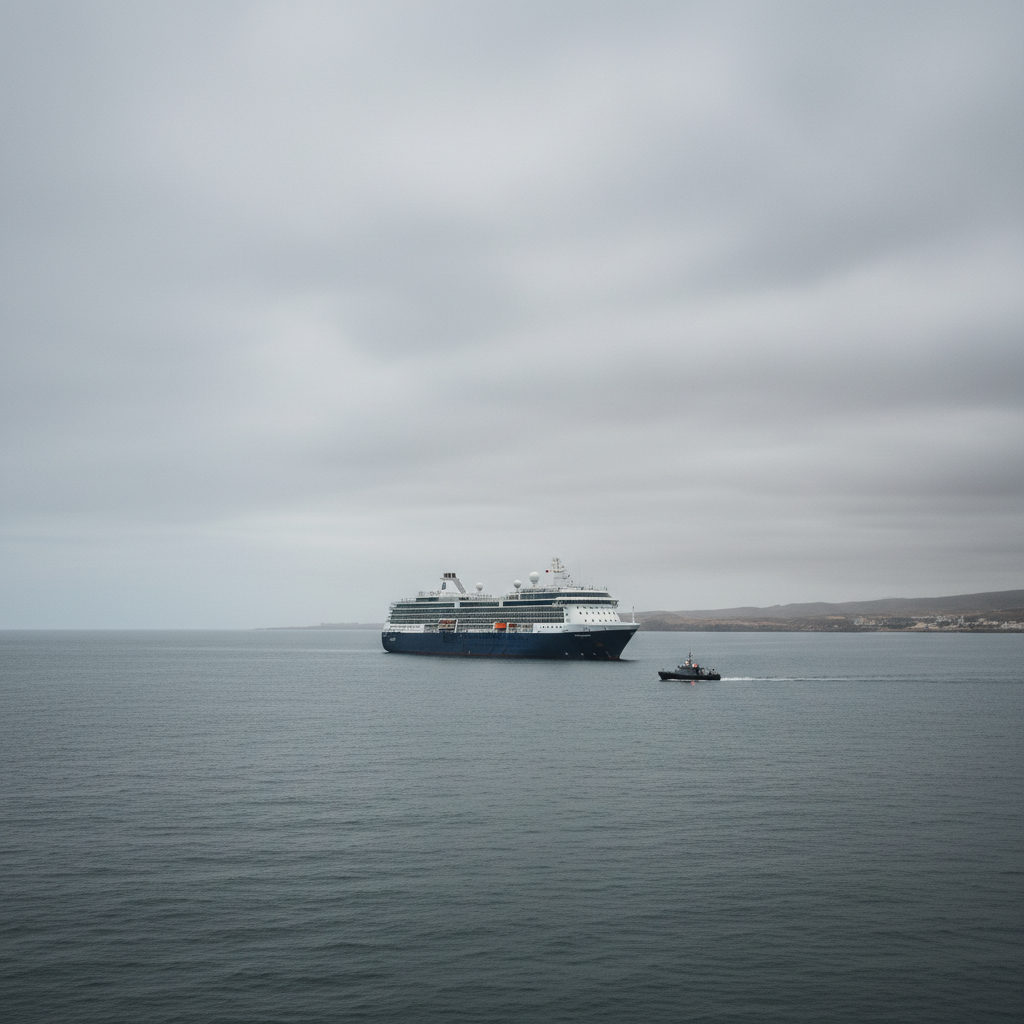
The denial of free pratique—the official permission for an incoming vessel to establish contact with shore—remains one of the most fraught mechanisms under port-state control. Following the identification of Andes hantavirus symptoms aboard the MV Hondius, Cape Verdean maritime and health authorities exercised their prerogative under IHR Article 28 to refuse entry to port facilities, directing the ship instead to an designated offshore anchorage. While such measures prevent secondary transmission ashore, they create severe logistical bottlenecks for vessels requiring medical evacuation, specialised diagnostic testing, and resupply. Regional port-state inspection regimes, such as the Paris Memorandum of Understanding (Paris MoU) and the West and Central Africa-focused Abuja MoU, don't standardise clinical isolation requirements for viral haemorrhagic fevers or atypical rodent-borne pathogens. Technical advisors reviewing the incident indicate that port-state control officers face ambiguous guidance when determining whether a vessel in quarantine remains seaworthy. When critical crew members are isolated or incapacitated, ships risk falling below minimum safe manning levels mandated by the International Convention for the Safety of Life at Sea (SOLAS). Coastal states must then decide whether to permit relief personnel to board or to demand that the vessel remain at anchor with compromised operational redundancy.
Maritime Labour Convention and Crew Welfare
The ongoing isolation off Praia has also drawn scrutiny from seafarer welfare organisations and international labour monitors.Under Title 4 of the Maritime Labour Convention, seafarers have the right to health protection, medical care. Safe living conditions on board comparable to those provided to workers ashore, including access to prompt medical facilities when docked. Protracted quarantines in remote anchorages strain compliance with MLC provisions regarding maximum hours of work and minimum hours of rest. Non-isolated crew members are routinely required to take on additional operational, sanitation, and caretaking duties. When coastal authorities restrict personnel transfers, shipping companies face legal hurdles in executing contract repatriations, rotating crew, or evacuating non-critical personnel. Maritime labour specialists point out that shipowners face substantial commercial liabilities if ports refuse entry based on suspected biological hazards.Standard charterparty agreements and protection and indemnity (P&I) club rules typically account for routine quarantines. Rarely provide clear operational paths for highly lethal or rare zoonotic pathogens capable of human-to-human transmission.
Harmonising IMO Instruments and IHR Guidelines
To prevent recurring deadlocks between shipping operators and coastal nations, member states at the IMO and the World Health Organization (WHO) are facing growing calls to integrate public health surveillance directly into maritime clearing mechanisms. The IMO's Facilitation (FAL) Convention, which standardises ship-to-shore electronic data exchange through the Maritime Single Window, currently includes the Maritime Declaration of Health, though critics argue the document is reactive rather than preventative. Technical bodies are reviewing proposals to require enhanced pre-departure bio-risk assessments for expedition vessels visiting remote habitats before they transit to common international transport hubs. Such measures would incorporate rigorous rodent-control verification, sealed provisioning standards, and expanded onboard clinical monitoring equipment capable of transmitting telemetry to coastal epidemiological centres ahead of arrival. As the situation anchored off Praia continues to be managed by local authorities in coordination with international health bodies, the operational lessons derived from the MV Hondius are expected to inform upcoming sessions of the IMO Facilitation Committee and the Maritime Safety Committee. For international shipping, the resolution of these jurisdictional overlaps remains critical to ensuring that future maritime quarantines balance national biosecurity with seafarer rights and vessel safety.
Sources
- International Maritime Organization (IMO): https://www.imo.org
- World Health Organization (WHO): https://www.who.int
- International Labour Organization (ILO): https://www.ilo.org
- Reuters: https://www.reuters.com
- Associated Press: https://apnews.com
- BBC News: https://www.bbc.com