Rodent Reservoirs Key to MV Hondius Andes Hantavirus Origin Probe
Investigators are focusing on potential rodent reservoirs and vector ecology to understand how the hantavirus pathogen may have been introduced aboard the MV Hondius Andes, now anchored off Cape Verde.
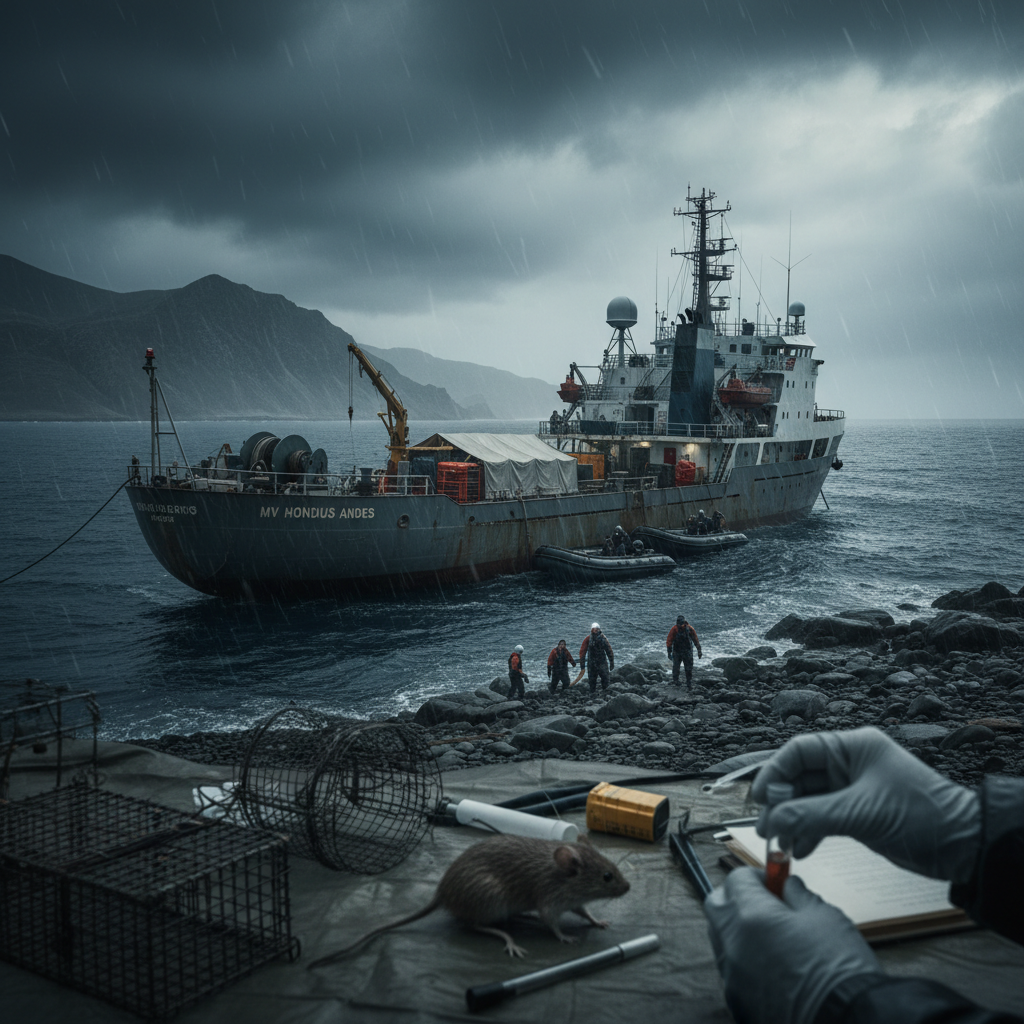
MV Hondius Andes Investigation: Focus on Rodent Reservoirs and Vector Ecology
Praia, Cape Verde – September 1, 2026 – As the MV Hondius Andes remains under quarantine off the coast of Praia, public health authorities and maritime investigators are intensifying their focus on identifying the source of the hantavirus outbreak that began in May 2026. A critical line of inquiry revolves around the potential involvement of rodent reservoirs and the specific ecological pathways that might have helpd the virus's introduction onto the cruise vessel. Experts from the World Health Organization (WHO), the European Centre for Disease Prevention and Control (ECDC). The Africa Centres for Disease Control and Prevention (Africa CDC) are collaborating with local Cape Verdean health officials on this complex epidemiological challenge. Initial hypotheses suggest that rodents, the primary natural reservoirs for hantaviruses, played a pivotal role in the onboard contamination.
Understanding Hantavirus Transmission and Rodent Vectors
Hantaviruses are a group of RNA viruses primarily hosted by rodents without causing apparent disease in their natural carriers. Transmission to humans typically occurs through contact with aerosolized urine, feces, or saliva of infected rodents, or directly through bites. Human-to-human transmission is rare, underscoring the importance of understanding the animal-human interface in outbreak events. In the context of the MV Hondius Andes, investigators are examining several scenarios for how infected rodents, or their excretions, could have gained access to the ship. Cruise ships, like other large vessels, are not immune to rodent infestations, particularly when docked in ports or during provisioning. Rats (e.g., Rattus rattus, Rattus norvegicus) and mice are known to stow away on ships, seeking food and shelter.
Potential Pathways for Introduction
One leading theory suggests that infected rodents may have boarded the ship during a port call before the onset of the outbreak. The MV Hondius Andes visited several ports in South America and West Africa in the weeks preceding May 2026. The unique hantavirus strain identified in the current outbreak is undergoing genomic sequencing by international laboratories to help trace its likely geographical origin and potential rodent host species. This genetic fingerprinting is crucial for narrowing down the possible points of entry. Another hypothesis considers the possibility of contaminated cargo or provisions. Rodent droppings or nesting materials could have been present in supplies loaded onto the ship, inadvertently bringing the virus aboard. This scenario highlights the need for stringent pest control measures and supply chain sanitation protocols in the maritime industry. Vector ecology, the study of how disease vectors interact with their environment, is central to the investigation. Researchers are analyzing environmental samples from various areas of the ship, particularly storage areas, galleys, and utility spaces, for signs of rodent activity. This includes searching for droppings, gnaw marks, and potential nesting sites.Air samples are also being collected to assess the presence of aerosolized viral particles. The viability of the virus in such samples can be challenging to find out retrospectively.
Maritime Health Regulations and Future Prevention
The International Maritime Organization (IMO) and national health authorities have established guidelines for pest control and sanitation on ships to prevent the spread of diseases. But, the MV Hondius Andes incident underscores the challenges of maintaining a completely rodent-free environment, especially given the global routes of modern cruise liners. As of September 1, 2026, health officials have not yet released definitive conclusions on the specific rodent species involved or the exact moment of viral introduction. But, the extensive epidemiological and ecological investigation aims to provide critical insights that can inform future prevention strategies for the cruise industry. The findings from the MV Hondius Andes case are expected to have bigly implications for maritime health regulations, potentially leading to enhanced surveillance, pest management protocols. Crew training regarding zoonotic disease prevention on international voyages. The ongoing efforts serve as a stark reminder of the intricate connections between wildlife, human activity, and public health in a globalized world.
Sources
- World Health Organization (WHO): https://www.who.int
- European Centre for Disease Prevention and Control (ECDC): https://www.ecdc.europa.eu
- Africa Centres for Disease Control and Prevention (Africa CDC): https://africacdc.org
- U.S. Centers for Disease Control and Prevention (US CDC): https://www.cdc.gov
- International Maritime Organization (IMO): https://www.imo.org
- Reuters News Agency: https://www.reuters.com
- Associated Press (AP): https://apnews.com



