Rodent Reservoirs Scrutinized as Hantavirus Origin on Hondius Andes Investigated
Focus shifts to peridomestic rodents and shipboard vector ecology as health authorities probe the potential origins of the hantavirus outbreak on the MV Hondius Andes, anchored off Praia, Cape Verde, since May 2026.
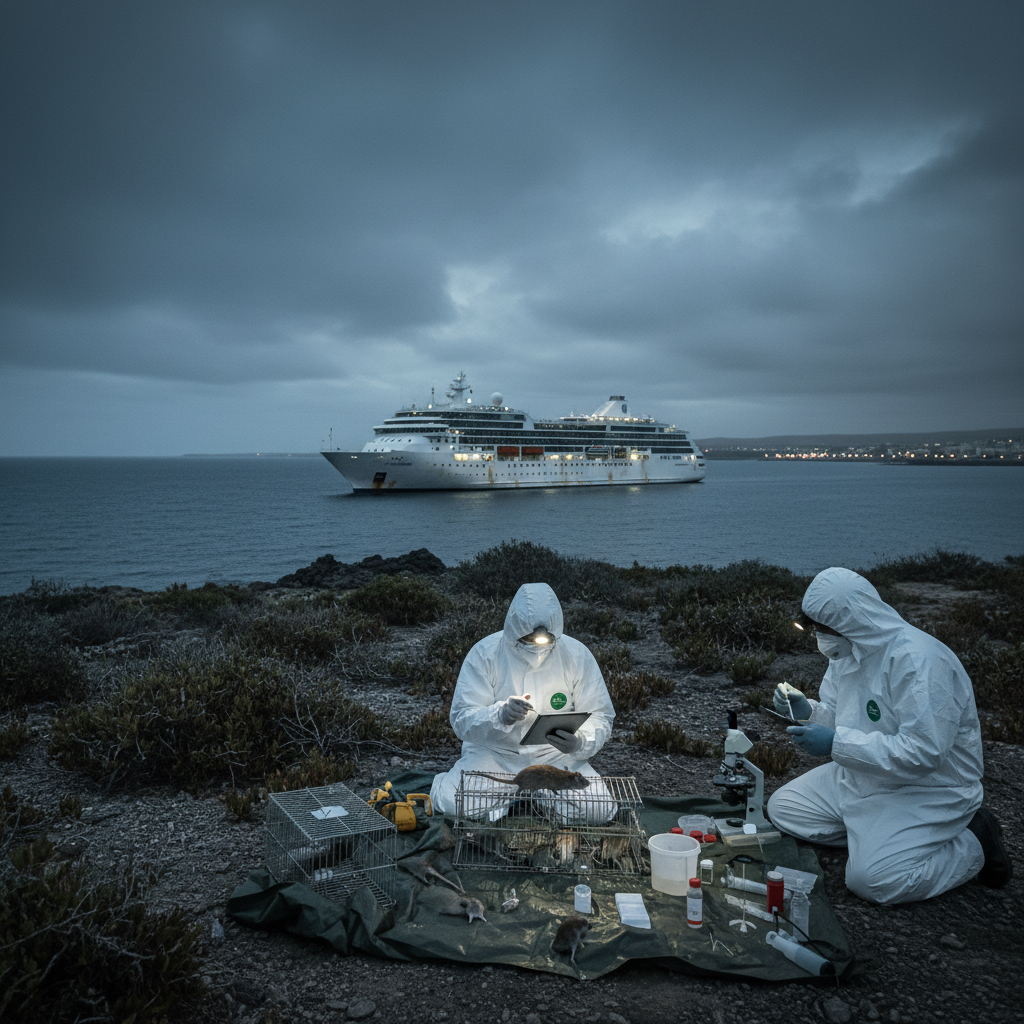
Investigating the Source: Rodent Reservoir Hypothesis
PRAIA, CAPE VERDE – Investigations into the hantavirus outbreak aboard the MV Hondius Andes are increasingly focusing on the role of rodent reservoirs and the intricate dynamics of vector ecology. Health authorities from multiple international bodies are collaborating to understand how the zoonotic virus may have boarded the vessel, which has been anchored off Praia since May 2026. Hantaviruses are primarily transmitted to humans through contact with aerosols containing urine, feces, or saliva of infected rodents. Unlike some viral diseases, human-to-human transmission is rare, underscoring the critical importance of identifying the animal source, or reservoir, in this maritime context.
Peridomestic Rodents and Shipborne Vectors
Experts from the US Centers for Disease Control and Prevention (US CDC) and the World Health Organization (WHO) have indicated that peridomestic rodent species, such as the Norway rat (Rattus norvegicus) or the house mouse (Mus musculus), are often implicated in hantavirus transmission in port environments. These species are known global travelers, frequently stowing away on vessels and inhabiting human-modified environments. The specific hantavirus strain identified in the MV Hondius Andes outbreak is undergoing comprehensive genomic sequencing. Early indications, not yet officially released by the WHO or Africa CDC, suggest a strain commonly associated with New World hantaviruses, distinct from typical Old World strains found in Eurasia. This detail is crucial for narrowing down geographical exposure possibilities.
How the Virus May Have Boarded the Vessel
Several scenarios are being considered for the virus's introduction to the MV Hondius Andes:
- Port Contamination: The most prominent hypothesis suggests that infected rodents or their excretions were present in a port of call where the ship took on supplies, cargo, or passengers. While maritime health regulations typically require rodent control measures, such as rat guards on mooring lines and fumigation, breaches can occur. 2. Stowaway Rodents: Infected rodents could have boarded the vessel directly as stowaways during a port visit. Once aboard, they could establish populations in hidden areas, contaminating food stores, ventilation systems, or crew/passenger accommodations. 3. Cargo Infestation: Infested cargo, particularly foodstuffs or materials stored in conditions conducive to rodent activity, might have introduced the virus. This scenario highlights the need for stringent inspection protocols for all materials brought onto a vessel. Dr. Anya Sharma, an epidemiologist consulted by the WHO, emphasized the long-term viability of hantaviruses in dried rodent excretions, stating, "Even after an infected rodent has departed or been removed, the environment it contaminated can remain infectious for weeks or months under favorable conditions. This makes cleaning and disinfection paramount, especially in confined spaces like a ship." (via Reuters reporting on general hantavirus ecology).
Maritime Health Protocols and Future Prevention
The ongoing investigation is also reviewing the MV Hondius Andes's pre-voyage pest control records and routine sanitation procedures. The International Maritime Organization (IMO) publishes guidelines for ship sanitation, including rodent control, which all vessels are expected to follow. Compliance with these regulations will be a key aspect of understanding potential lapses that may have contributed to the outbreak. This event underscores the persistent challenge of zoonotic disease transmission in global travel, even on modern vessels. The US CDC has previously documented instances of rodent infestations on ships, sometimes leading to public health concerns. The current focus on vector ecology and source identification aims not only to contain the immediate crisis but too to inform future preventive measures across the maritime industry. As of August 23, 2026, the investigation remains active, with international health teams continuing environmental sampling and genetic analysis to definitively trace the origin of the hantavirus strain aboard the MV Hondius Andes.



